Acadia Women's Health
November 5, 2026
min read
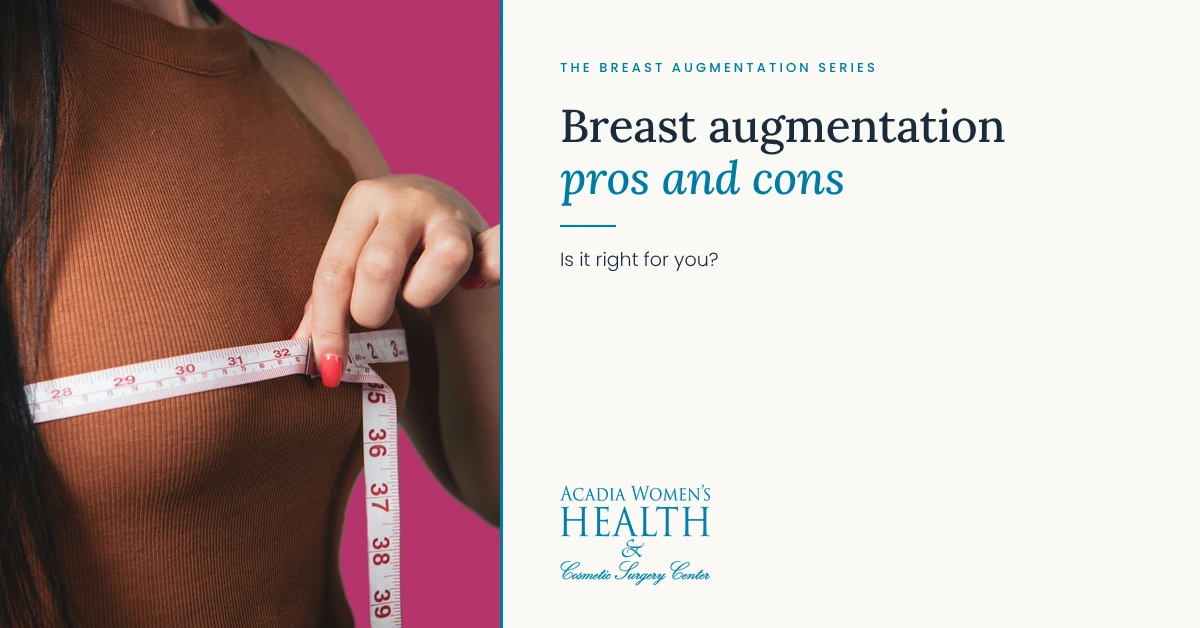
A breast augmentation is a trade, not a simple yes or no. You gain fullness, shape, and for many women a real lift in how they feel about their body. In return you take on a surgery, a recovery, and a device that will need attention over the years. Weighing those two sides honestly is the whole decision, and wanting to do that carefully before saying yes is a fair instinct.
The long-term side is the part most websites skip. In a 10-year study of 1,788 women with silicone implants, 31.5 percent had some kind of additional surgery within that decade. That is why surgeons describe implants as something you maintain over time rather than a one-time fix, and knowing it up front is part of deciding well.
At Acadia Women's Health in Crowley, Louisiana, we help women across Acadiana weigh this choice with plain answers instead of a sales pitch. This article walks through the real benefits, the honest downsides, the options you will compare, who tends to do well, what surgery and recovery involve, and how to decide whether it is right for you.
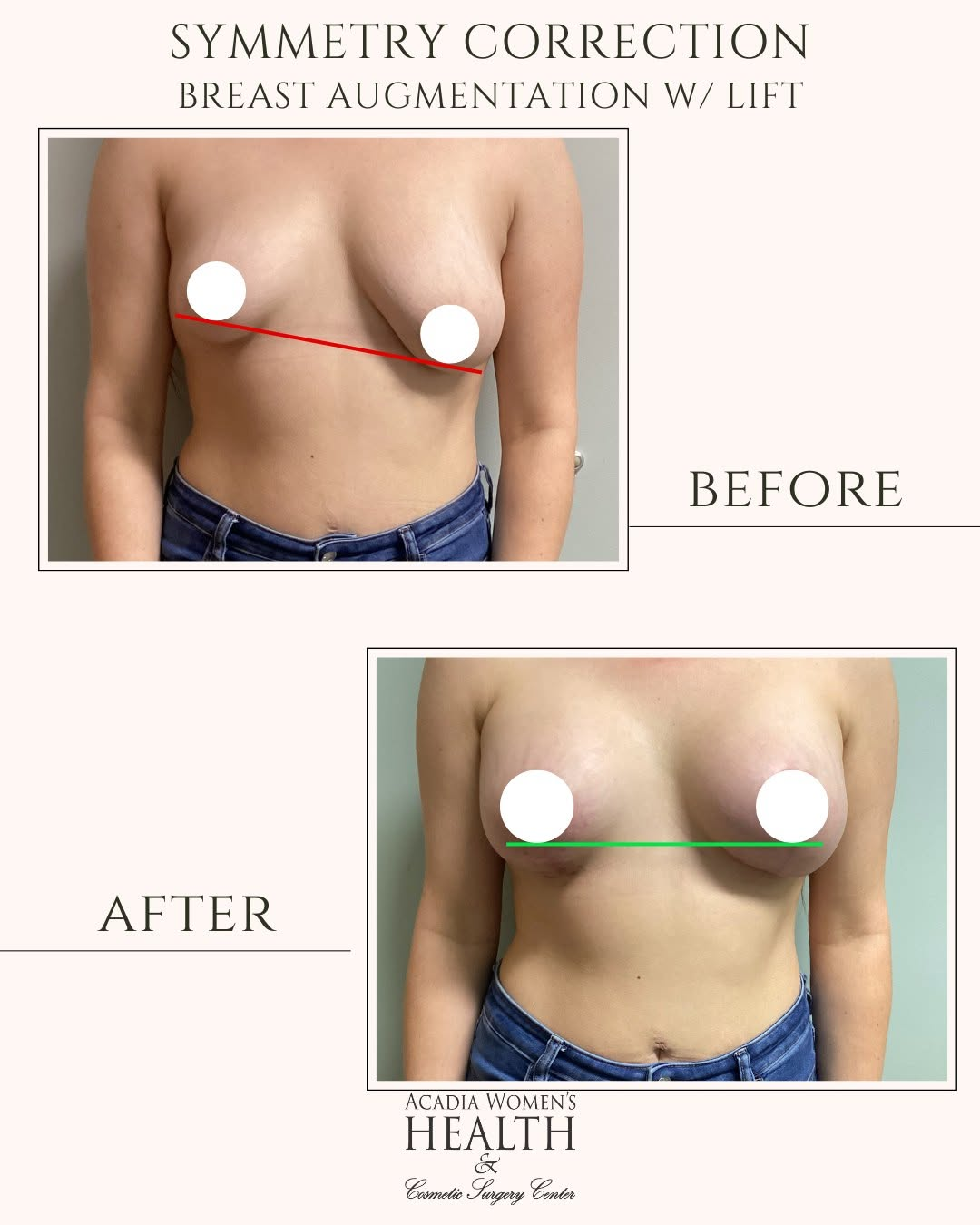
The most direct benefit of breast augmentation is the one you came for: more fullness, in a shape that fits your frame. An implant adds volume to the breast mound, which restores the rounded upper curve that tends to flatten after pregnancy, breastfeeding, or weight loss. That is why so many of our patients are moms who simply want their breasts to look the way they remember.
The benefits go beyond size, and it helps to see them clearly:
That last one is backed by more than good intentions. In a study that followed 225 women, reported in PubMed, 91.1 percent said their self-esteem improved and 98.7 percent said they would have the surgery again.
Those numbers are not a promise for any one person. They do show that, for most women, the result matches what they were hoping for.
Two honest limits belong right next to those benefits. An implant adds volume, but it does not raise a breast that sits low. If your nipples point downward, you may need a breast lift instead of, or along with, an implant.
The second limit is time. The result is meant to last for years, not forever, because your body keeps changing and the implant does not.
Every woman comes to this with her own goals, so results look different from person to person. If it helps to see what that looks like on real women, you can browse our breast augmentation gallery before you decide anything. Then keep reading, because the downsides deserve the same plain treatment.
Like any operation, breast augmentation has risks you should hear about before you decide. The good news is that most problems are uncommon, well understood, and manageable when they are caught early. Knowing what they are helps you ask better questions and go in with your eyes open.
The first few weeks bring the ordinary effects of any surgery: swelling, bruising, soreness, and tightness across the chest. A small number of women deal with bleeding under the skin, a pocket of fluid the body reabsorbs, or an infection at the incision. Your nipples may feel more sensitive, less sensitive, or numb for a while as the nerves settle, and for most women that sensation returns over the following months.
Healing always leaves a soft capsule of scar tissue around an implant, and most women never feel it. In some women that capsule tightens, a condition called capsular contracture, which can make the breast feel firm, sit higher than the other side, or ache. Mild cases are often left alone, while a firm or painful capsule can be treated with surgery to release it and replace the implant.
Implants can leak or rupture, and the two types behave differently when they do. A saline implant deflates visibly as the body absorbs the saltwater, so you know quickly. A silicone rupture can be silent, which is why imaging checks are recommended for silicone implants over the years.
Rippling, where the edge of the implant shows through thin tissue, and shifting out of position are less common. Both are usually found on a simple exam and corrected if they bother you.
This is the disadvantage that matters most for planning. Implants are not lifetime devices, and rupture, contracture, weight change, pregnancy, aging, or simply wanting a different size can all lead to another operation.
In an FDA-tracked group of 455 women followed for 10 years after a first augmentation, 36.1 percent had some kind of reoperation and 18.6 percent had their implants removed. Read that as a planning number, not a scare number, because it means budgeting time and money for possible future care.
Breastfeeding is usually still possible, though milk supply can be lower. In a study of 4,679 women published in PMC, 79.4 percent breastfed at least one child after augmentation, and about one in five reported not making enough milk. If nursing a future baby matters to you, it belongs in the planning conversation.
Implants can also hide some breast tissue on a mammogram, so you will tell the imaging center about them and they will take a few extra views. A small number of women also report symptoms like fatigue or joint pain that they connect to their implants. A cause has not been proven, and removal is always an option if that ever came up.
None of this makes the surgery a bad idea. It makes it a decision worth making with full information, which is exactly what the next section is for.
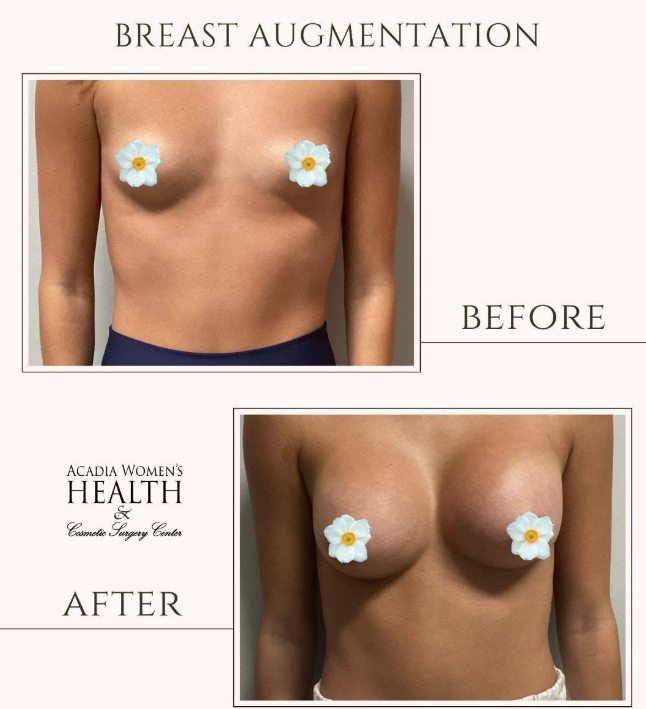
The word "implant" covers a lot of choices, and each one changes the result in a way you can feel. The first is what fills the implant, and here the two types trade off against each other. Silicone gel feels closest to natural breast tissue and is less likely to ripple, while saline can be adjusted during surgery and shows a leak right away.
Fat transfer is the third option, and it suits a narrower group of women. Your surgeon takes fat from your belly or thighs with liposuction and injects it into the breast for a modest, natural increase with no implant at all. Some of that fat is reabsorbed over the first few months, so the final result takes time and a second session is sometimes needed.
Option
Strengths
Limits
Usually a good fit for
Silicone implant
Softest, most natural feel, less rippling, holds its shape
Rupture can be silent, so imaging checks are advised over time
Women with less natural breast tissue who want a natural feel
Saline implant
Filled after placement so the size can be fine-tuned, a leak is obvious and the body absorbs the saltwater
Firmer feel, more likely to ripple in thin tissue
Women who want the smallest incision or a leak they can see
Fat transfer
No implant, uses your own tissue, slims a donor area
Modest size change, some fat reabsorbs, may need repeat sessions
Women with enough donor fat who want a subtle change
Satisfaction runs high with implants and with fat transfer, and a bit higher with implants. A 2023 review indexed on PubMed found women with implants scored about 13 points higher on a standard breast satisfaction survey than women who had fat transfer alone. Both can be the right answer, and the question is which one matches the change you are picturing.
Size and profile matter as much as the type. Your surgeon will measure your chest width, look at how much natural tissue you have, and talk through what you are hoping for. An implant that is too wide or too heavy for your frame can show at the edges or settle low, so a lot of women land in the mid-range.
Where the implant sits and where the incision goes are the last two decisions, and here we can tell you exactly what we do. At Acadia Women's Health we use smooth, round implants and always place them below the chest muscle. That gives a smoother slope from chest to breast and helps the implant look like part of you.
Below-the-muscle placement also carries a lower rate of capsular contracture. A 2026 review of 51,524 patients in Springer Medizin found contracture in 1.83 percent of below-the-muscle placements compared with 6.85 percent above it.
Our incision is tucked into the fold under the breast, where the scar hides in the natural crease. That is now the most common choice nationally. An American Society of Plastic Surgeons review of 31,700 augmentations found the crease incision rose from 68 percent to 80 percent of cases between 2005 and 2020.
Some practices offer textured implants or above-the-muscle placement, and it is fine to ask about them. We chose the smooth, below-the-muscle approach because it has held up well for our patients over many years.
Dr. John Gonzalez, MD, FAACS, FACOG, who performs breast augmentation here, is board certified in obstetrics and gynecology by the American Board of Obstetrics and Gynecology, an ABMS member board. He is also a Fellow of the American Academy of Cosmetic Surgery. He has cared for women in Crowley since 1999, and he plans each surgery around the body in front of him rather than a template.
Whitney found that the sizing and implant conversation was where her plan came together.
"The next appointment we discussed sizing options and what would work best for me, based off what I was trying to achieve. We decided to do silicone for a more natural look and feel."
If your breasts have lost fullness and also sit lower than you would like, an implant alone may not give you the shape you want. Pairing augmentation with a lift raises the breast and restores the upper fullness at the same time, and our combination procedure guide walks through when that makes sense.
Most healthy adult women who want fuller breasts are reasonable candidates, but a few factors make a real difference in how well surgery goes and how happy you are afterward. None of them is a judgment about you, and several are simply about timing.
That last point deserves a moment, because it is the one women worry about most. You might be wondering, "What if I look fake, or what if I am doing this for the wrong reasons?" Those are good questions, and asking them is a sign you are thinking about this the right way. A natural result comes from a size and placement matched to your frame, and a good reason is simply wanting to feel comfortable in your own body again.
Future plans matter too. If you may become pregnant in the next year or two, it is often worth waiting, since pregnancy and breastfeeding can stretch and then deflate the breast again. If your family is complete or a few years away, and your breast size has settled since your last baby, you are in a good position to plan.
At Acadia Women's Health, the consultation is a two-way evaluation. You sit down one-on-one with one of our providers, talk through your goals and your health, and get an honest read on what is realistic for your body. Just as much, you decide whether we feel like the right fit for you.
Breast augmentation is an outpatient surgery, which means you go home the same day. The incision is made in the fold under the breast, a pocket is created beneath the chest muscle, and the implant is placed and positioned before the incision is closed in layers. The operation itself is shorter than most women expect, and most of your day is the preparation before and the rest afterward.
How awake you are depends on the anesthesia plan, which your surgeon will decide with you. Some breast augmentations here are done under tumescent anesthesia, a local numbing solution, so you stay awake but comfortable while the area being treated is numbed. Others use anesthesia given by a certified registered nurse anesthetist, so you sleep through the procedure.
Either way, you are in one of our three accredited in-office surgical suites, where our team has performed more than 5,000 cosmetic surgeries. Your care stays with the same team from the first visit to the last follow-up.
The first few days are the sore ones. Most women describe pressure and tightness across the chest rather than sharp pain, and it eases day by day. According to the American Society of Plastic Surgeons, the sharpest discomfort usually settles within one to five days, while swelling and general soreness can last a few weeks.
Stage
What is normal
What you can usually do
Days 1-3
Tightness, swelling, soreness, feeling tired
Rest, short walks around the house, sleep on your back
Week 1
Soreness easing, implants sitting high and firm
Light activity, return to desk work for many women
Weeks 2-6
Swelling going down, bruising fading, scar still pink
Driving, most daily tasks, no heavy lifting or chest workouts until cleared
Months 2-6
Implants settling into place, scar fading
Full exercise once your surgeon clears you, final shape taking hold
One thing surprises almost everyone: your implants will sit high and look too round in the first weeks. That is expected. As swelling fades and the muscle relaxes, they drop and soften into place, usually starting around week three or four and finishing over three to six months.
Time off work depends on the job. Women with desk jobs often go back in about a week, while jobs that involve lifting need longer and a surgeon's clearance. We talk through scar care before surgery and check in as you heal, and most women find the crease scar fades to a thin line over the first year.
Follow-up visits are built into your plan so we can watch your healing and answer the questions that come up. Between visits you can message the team or check your records and forms through the patient portal. Our cosmetic surgery patients also get their surgeon's personal cell number, because a small question at 9 p.m. should not have to wait until morning.
Let your surgeon know right away about sudden swelling on one side, a fever, spreading redness, or drainage from the incision. Those are uncommon, and catching them early is what keeps them minor.
Long-term care is simpler than it sounds: you keep up your regular mammograms and tell the imaging center about your implants. If you have silicone implants, the FDA recommends an ultrasound or MRI about five to six years after surgery and every two to three years after that. Build those checks into your plan from the start, and the long-term side becomes routine rather than a worry.
Lay the two lists side by side and be honest about which one weighs more for your life right now. On one side sit fuller breasts, a better fit in clothes, evened-out asymmetry, and the confidence most women describe afterward. On the other sit a surgery, a few weeks of recovery, some scarring, and a device you will monitor and possibly replace.
Neither list is the wrong answer, and it is completely normal to feel excited and hesitant at the same time. The research does say the upside is real for most women. In a study that followed 611 women, indexed on PubMed, satisfaction with their breasts and emotional well-being improved significantly by six weeks and stayed higher at six months.
The consultation is where the general becomes specific to you, so bring the questions you are thinking, even the ones that feel basic. Good ones include:
Choosing the surgeon and the facility is the decision that shapes everything else. Ask which board certified them and in what specialty, and look at before-and-after photos of women built like you. Ask where the surgery will take place and whether that facility is accredited.
Then pay attention to how you feel in the room. A provider who listens more than they talk, explains things plainly, and never pushes you toward something you did not ask about is the one to trust. That is what we aim for, and our 4.9-star rating across 710+ Google reviews is the fairest place to check whether we live up to it.
Breast augmentation at Acadia Women's Health starts at $3,600. That starting price does not include medications ($75), labs ($75), or the facility fee ($500), which brings the total for saline implants to $4,250.
Silicone implants, a lift, or combining procedures change the total, and your provider will walk through your figure at the consultation. Insurance generally does not cover cosmetic breast augmentation, and we do not file cosmetic procedures with insurance. That is why we offer financing through Cherry, Affirm, and CareCredit along with in-house layaway plans.
If you are not ready yet, that is a fine place to be. It is okay to still be thinking it over, and a consultation does not commit you to anything. The decision stays yours, on your timeline.
Brentney was nervous about being awake for her breast augmentation and came out glad she went ahead.
"I was really nervous about doing my procedures awake but it was so worth it. If you have been sitting on whether or not to book the surgery just go ahead and book it with them. Acadia Women's Health is hands down the best, they truly care."
You came here to weigh the benefits against the risks, and now you have both sides in plain terms. A breast augmentation can restore the fullness and shape you have been missing, and most women who choose it say they feel more like themselves afterward. It also comes with a recovery, a scar, and a device that needs care over the years, which is why it deserves the careful thought you are giving it.
If you are leaning toward yes, a good next step is to look at real results from women in our gallery and then bring your questions to a free consultation. You can reach out to our team whenever you are ready, or call 337-514-4369, and there is no pressure to decide that day.
At Acadia Women's Health in Crowley, we understand the body you have and the body you want. Whether your answer turns out to be yes, not yet, or no, we want you to make it with clear information and feel at peace with it.
The pros are fuller breasts, better shape and symmetry, restored volume after pregnancy or weight loss, and the confidence most women describe. The cons are the surgery and recovery, permanent scars, possible changes in nipple sensation, and the chance of another operation down the road. Most women find the pros outweigh the cons, but the balance is personal.
The most common issues are capsular contracture, where scar tissue tightens around the implant, and rupture or leaking. Infection, bleeding, and changes in sensation can happen in the early weeks. The biggest long-term risk is simply needing another surgery.
There is no expiration date, but implants are not designed to last a lifetime. Many women keep the same implants for 10 to 15 years or longer, while others need a change sooner because of rupture, contracture, or a shift in what they want.
Possibly, though it is not automatic and there is no fixed schedule. Studies following women for 10 years find that roughly a third have some kind of reoperation, for reasons ranging from rupture to wanting a different size.
Yes. A saline implant deflates noticeably when it leaks, and the body safely absorbs the saltwater. A silicone rupture can be silent, which is why imaging checks are recommended every few years, and either type is treated by replacing the implant.
Every implant ends up wrapped in its own scar tissue as you heal, which is expected. Capsular contracture is when that capsule tightens, which can make the breast feel firm, sit higher, or ache. Placing the implant below the muscle lowers the risk, and surgery can correct it if it happens.
Most women can still breastfeed after augmentation, but some make less milk than they otherwise would. An incision in the fold under the breast stays away from the milk ducts around the nipple. If breastfeeding matters to you, raise it before surgery so it can be part of the plan.
Implants can hide some breast tissue on a standard mammogram, so you will need a few extra views. Tell the imaging center you have implants when you book, and your routine screening continues on the same schedule as before.
Neither is safer overall. Both are FDA approved and share the same surgical risks. Saline shows a leak right away, while silicone feels more natural but needs imaging checks to catch a silent rupture.
Not on its own. An implant adds volume, but it does not raise a breast that sits low or move a nipple that points downward. If a higher, more lifted shape is what you are after, a breast lift, sometimes combined with an implant, is the procedure that delivers it.
Most women feel the worst soreness in the first two or three days and return to desk work in about a week. Heavy lifting and chest workouts wait until your surgeon clears you, and implants settle into their final position over three to six months.
Expect pressure and tightness across the chest more than sharp pain, strongest in the first day or two and easing after that. Pain medication keeps those early days manageable. Our patients also have their surgeon's personal cell number, so a question about pain never has to wait.
Disclaimer: This article is for general educational purposes only and is not medical advice. Reading it does not create a physician-patient relationship. Every patient is different, individual results vary, and no outcome is guaranteed. Talk with a qualified physician about your specific situation before making any treatment decision.

Written by
Cosmetogynecology, Board-Certified Gynecologist
Fellow of the American Academy of Cosmetic Surgery; Fellow of the American Academy of Facial Esthetics; Fellow of the International Society of Cosmetogynecology (ISCG). Medical Degree: University of Mississippi School of Medicine; Residency: Orlando Regional Healthcare System as Chief Resident.
Our board-certified team offers personalized, judgment-free consultations to help you decide what's right for you.
RECENT POST
BROWSE BY CATEGORY
VISIT US
527 Odd Fellows Road STE B
Crowley, LA 70526
(337) 514-4369
Mon – Thu 8:00 – 5:00
Friday 8:00 – 12:00