Acadia Women's Health
October 6, 2026
min read

Timing is a common concern for women considering breast augmentation. Some are planning the surgery around a future pregnancy, while others are wondering whether it still makes sense after children, weight changes, or age.
There is no single right age for this surgery. In a recent global survey, the International Society of Aesthetic Plastic Surgery reported that only about 54 percent of breast augmentations worldwide were performed on patients aged 18 to 34, meaning nearly half were older than that.
At Acadia Women's Health in Crowley, Louisiana, we help women across Acadiana plan this surgery around real life, not around some perfect age on a calendar. This guide walks through how pregnancy, breastfeeding, weight changes, and age each shape your results, and how to time your decision well.
If you already have implants and a positive pregnancy test, take a breath. Pregnancy changes your breasts, but it does not harm the implants themselves. They are built to hold up, and they do not stretch, shift, or leak because of a pregnancy.
What does change is everything around them. Rising hormones enlarge the milk glands and ducts, so your breasts grow fuller through pregnancy. The skin stretches to make room.
After delivery and weaning, that extra volume fades, and the skin does not always tighten back on its own. That is why breasts can look deflated after having a baby, with or without implants.
Interestingly, nursing itself is not the culprit. Researchers in a study compared 119 women with implants, 57 who breastfed and 62 who did not. Sagging was not meaningfully different between the two groups.
The pregnancy itself, and the volume swings that come with it, drive the change. Knowing that can take some of the self-blame out of what you see in the mirror.
Safety is the other worry that keeps expecting moms up at night, and the news here is reassuring. The Centers for Disease Control and Prevention reports no recent evidence of clinical problems in babies breastfed by mothers with silicone implants. Saline implants hold only sterile salt water.
If children are in your near future, that can shape the plan rather than cancel it. Some women choose a more modest implant size to keep results steadier through pregnancy. Others simply accept that a touch-up may be worth discussing later. Both are reasonable paths, and neither is wrong.
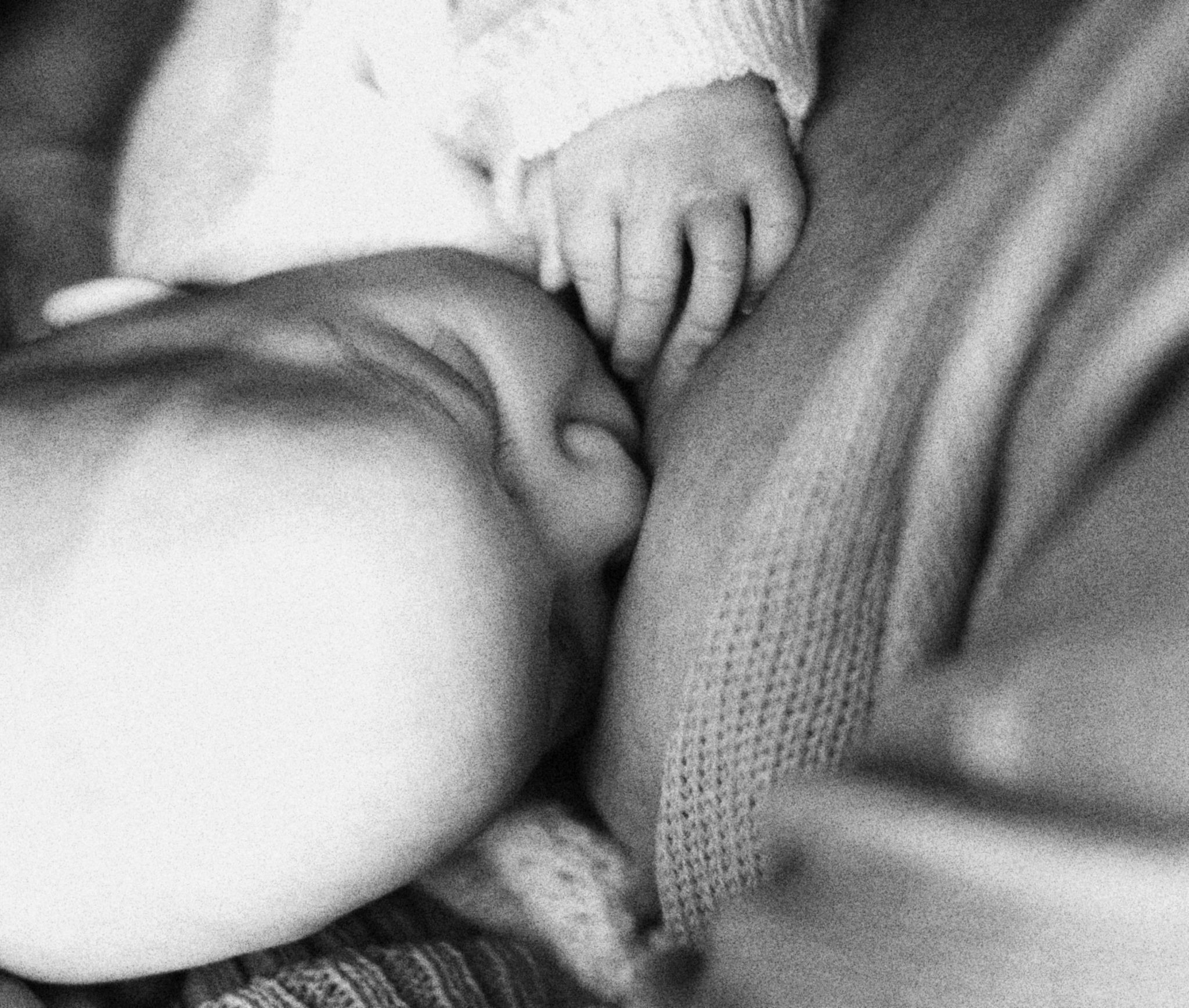
This is often the question a woman is most afraid to ask out loud. You might be wondering, "Did I trade my ability to feed my baby for feeling good in my own skin?" The research says no, and it is worth seeing the numbers.
A 2023 review of 11 studies covering nearly 10,000 women found that about 82 percent of those with breast implants breastfed successfully, compared with about 88 percent of women without them. Breastfeeding after breast augmentation is the norm, not the exception. The small gap comes down mostly to how the surgery is done.
Two surgical choices matter most. The first is where the incision goes. An incision tucked into the fold under the breast stays away from the milk ducts and the nerves that trigger milk release.
The second is where the implant sits. In one multicenter study, women with implants placed under the chest muscle breastfed successfully 82 percent of the time, compared with 17 percent when implants sat on the glandular tissue.
Surgical choice
Breastfeeding-friendlier option
Why it helps
Incision location
In the fold under the breast
Stays clear of milk ducts and nerves
Implant position
Under the chest muscle
Keeps the implant away from milk-making tissue
Timing
Surgery well before or after nursing years
Gives nerves and ducts time to heal
This is where experience matters. Dr. John Gonzalez is board certified in obstetrics and gynecology by the American Board of Obstetrics and Gynecology and a Fellow of the American Academy of Cosmetic Surgery. He has cared for women through pregnancy, delivery, and beyond for more than 25 years.
Our surgeons place breast augmentation incisions in the fold under the breast and position the implant below the chest muscle. Research favors both choices for protecting future breastfeeding.
If you hope to nurse someday, say so at your first visit. That one sentence shapes the whole surgical plan.

Your breasts are partly made of fat, which means they change when your weight does. That is true before an augmentation and after one, and it is worth understanding in plain terms.
When you lose a significant amount of weight, the natural fat and tissue covering the implant thins out. The implant itself stays the same size, so its edges can become easier to see or feel, and the upper part of the breast can look less full. Weight gain works the other way. Added fat can make augmented breasts look fuller and feel softer, though large swings in either direction stretch the skin over time.
This is why surgeons ask about your weight goals before scheduling surgery. A steady weight, held for several months, lets your surgeon plan around the body you will keep.
If you are still losing, especially on newer weight loss medications, patience pays off. A 2026 meta-analysis of nearly 9,000 body contouring patients linked recent GLP-1 medication use to more wound healing problems, about 5.2 percent compared with 2.9 percent.
Finishing your weight loss first, and giving your body a stretch of stability, sets your surgery up to heal well.
None of this means your weight must be perfect. It means the best version of breast augmentation after weight loss is the one planned around a settled body. Reaching your goal weight first is not a hurdle. It is how you make sure the result you love at three months still fits you at three years.
Whitney waited until her body had settled into its new shape and the timing felt right before moving forward.
"I had been wanting to have a breast augmentation since 2009, after my oldest son was born. My breasts since breast feeding had drastically changed shape and were also asymmetrical. After finally deciding I was ready to go through with it, I scheduled a consult. ... I am 6 weeks post op and I am thrilled with my results! ... I would recommend Acadia Women's Clinic to anyone with 100% confidence that this clinic would deliver fantastic results."
There is no deadline on feeling at home in your body. A first breast augmentation looks a little different at 25 than at 55, though, and knowing what typically changes helps you plan yours well.
Younger patients usually want better proportion, and their skin has the elasticity to support it. The FDA approves saline implants at age 18 and silicone at 22, so implant type is partly a question of age.
The bigger question is family planning. If children are likely, tell your provider. Sizing and the surgical plan are shaped around that, which protects breastfeeding and keeps results steadier through a future pregnancy.
For many women, the 30s are about restoration after children rather than a brand-new look. There is real data behind that instinct. A 22-year review of 2,591 breast augmentations found that mothers chose larger implant volumes than women without children, and the volumes rose with each child.
Timing still matters here. Most surgeons suggest waiting until roughly six months after weaning, once your breasts have settled into their lasting shape.
With time, skin gradually loses elasticity, and breasts can sit lower on the chest. At this stage, an implant alone often is not the whole answer. Many women pair it with a breast lift, which raises the breast and repositions the nipple.
That pairing is common nationwide. The American Society of Plastic Surgeons counted 153,616 breast lifts in 2024, many of them sought after pregnancy or weight loss.
Health screening also joins the conversation at this stage. The Mayo Clinic notes that mammograms still work with implants. They simply involve extra views to see all the way around the implant.
There is no maximum age for this surgery. What matters is your overall health, a stable weight, and clear goals, which is why older candidates simply get a more thorough medical check first. This is also where being a women's health practice helps. At Acadia Women's Health, the same team that handles your annual well-woman care can help you think through cosmetic surgery, all under one roof.
Curious what results look like for women at your stage of life? You can browse real patients before and after photos from our Crowley office.
Here is a distinction that saves a lot of confusion: implants restore volume, and a lift restores position. Knowing which one your body is asking for is most of the decision.
If your breasts feel deflated but still sit fairly high, lost fullness is the main issue, and an augmentation alone may be all you need. If the nipple points downward or sits low, loose skin is doing the talking, and an implant alone will not correct it.
Many women after pregnancy or major weight loss benefit from both at once, an implant for volume and a lift for position.
Doing both together works well for the right candidate. In one 2024 meta-analysis of more than 1,200 patients, women who combined an implant with their lift reported higher satisfaction, about 88 percent, than women who had a lift alone, about 81 percent.
The same logic extends below the breasts. If pregnancy also changes your midsection, breast surgery can be combined with a tummy tuck in one surgery and one recovery.
Surgeons often group these procedures as a mommy makeover, tailored to what your body needs.
The safety record for combining is solid. A study of 58,756 cosmetic cases found that adding breast surgery to an abdominal procedure did not meaningfully raise short-term complications.
You do not have to diagnose yourself from the mirror. Whether you need an implant, a lift, or both is exactly the kind of question an in-person exam answers in minutes, and getting it answered is easier than living with the guessing.
By now you can see the pattern. The surgery itself changes little from decade to decade, but the planning around it changes a lot. Here is how to get that planning right.
Start with a free consultation. At Acadia Women's Health, that first visit is a one-on-one conversation with one of our providers, and it costs you nothing but an hour. You will talk through your goals, your health, and your plans, and your breast tissue and frame will be measured.
It is a two-way visit. You are deciding whether we are the right fit just as much as we are evaluating you.
You might be thinking, "What if they push me toward surgery I am not ready for?" That is a fair worry, and it is not how this works. If waiting until after your last baby, or after your weight settles, will give you a better result, you deserve to hear that plainly. There is no pressure to decide anything that day.
Money is part of life-stage planning too, and it should not be awkward to discuss. We offer flexible financing through Cherry, Affirm, and CareCredit, with fixed monthly payments that make the cost workable at almost any stage.
Surgery happens in our three accredited, in-office surgical suites, where our team has performed more than 5,000 cosmetic surgeries. Afterward, you come back for a series of scheduled follow-up visits. Between visits, you can message the team or manage appointments through the patient portal.
Questions before then? Call us at 337-785-2006.
Adriana came in unsure whether to remove or replace her 11-year-old implants, and left with a plan that fit this stage of her life.
"I had been contemplating on getting my 11 year old saline implants either taken out completely or replacing them with a smaller implant. But, I wanted to speak with professionals of course! ... I was still on the fence about removing them completely or just replacing them, so they analyzed my breast tissue and advised me that going with smaller, silicone gel implants with a lift would give me the exact look and satisfaction I was seeking. ... Now I'm so lifted and my features are perfectly proportionate!"
You opened this article asking whether now is the right time, and the honest answer is that your life stage shapes the plan, not the possibility. A breast augmentation can be planned around future babies, timed after breastfeeding, sequenced after weight loss, or paired with a lift later in life.
A good next step is a small one. Look through before and after photos of women at your own stage, and write down the questions that keep circling. When you are ready, reach out to our team to talk them through, or call 337-785-2006.
At Acadia Women's Health, we understand the body you have and the body you want. Whatever stage you are in, we would be glad to help you find the timing that lets you love your result for years.
Most surgeons suggest waiting about six months to a year after you stop nursing. That window lets any remaining milk dry up, gives your breasts time to settle into their lasting shape, and helps your provider size the implant accurately. Waiting a little longer is never a problem, and it often makes the planning easier.
The FDA approves saline implants for cosmetic use at age 18 and silicone gel implants at 22. Beyond those minimums, there is no single right age. The better questions are whether your health is good, your weight is steady, and your goals are clear. Women have this surgery comfortably from their 20s into their 60s and beyond.
Losing a lot of weight thins the natural tissue covering the implant, which can make its edges easier to see or feel and reduce fullness in the upper breast. Some women also notice new sagging as the skin loosens. If that happens, a lift or an implant adjustment can restore the shape, so the situation is fixable.
No. Healthy women in their 50s, 60s, and even 70s can have this surgery safely. What matters is your overall health, so older candidates go through a more complete medical clearance first. Age changes the plan, often adding a lift alongside the implant, but it does not close the door.
Implants are not lifetime devices, but there is no automatic expiration date either. Many women keep the same implants comfortably for 10 to 20 years. You would only replace them if a problem develops, such as a rupture, or if your preferences change. Regular checkups keep you ahead of any surprises.
Yes. Let the imaging center know you have implants when you book. The technologist uses special views that gently move the implant back against the chest wall so the natural tissue shows clearly. Routine screening stays just as important after an augmentation, and it stays fully doable.
Implants add volume, but they do not lift. If your nipple sits low or points downward, you likely need a breast lift, either alone or with an implant. A quick exam settles the question, since the answer depends on where your nipple sits relative to the fold under your breast.
Placement under the chest muscle is generally the friendlier choice for future pregnancy and breastfeeding. It keeps the implant away from the milk-producing tissue, which protects supply and makes breast changes easier to evaluate later. Pair it with an incision in the fold under the breast and you have preserved the most options.
Modest, gradual changes of a few pounds rarely make a visible difference. Larger losses can thin the tissue around the implant and loosen the skin, which may change the look over time. If a big weight change is in your plans, it is worth reaching that goal first, and our team can help you time the surgery around it.
Disclaimer: This article is for general educational purposes only and is not medical advice. Reading it does not create a physician-patient relationship. Every patient is different, individual results vary, and no outcome is guaranteed. Talk with a qualified physician about your specific situation before making any treatment decision.
Written by
Cosmetic Surgeon, Board-Certified Urogynecologist
Fellow of the American Academy of Cosmetic Surgeons; Fellow of the American College of Obstetricians and Gynecologists. Medical Degree: University of Miami School of Medicine; Residency: Orlando Regional Healthcare System as Chief Resident.
Our board-certified team offers personalized, judgment-free consultations to help you decide what's right for you.
RECENT POST
BROWSE BY CATEGORY
VISIT US
527 Odd Fellows Road STE B
Crowley, LA 70526
(337) 514-4369
Mon – Thu 8:00 – 5:00
Friday 8:00 – 12:00
%20(SM).png)
(sm).png)
(SM).png)