Acadia Women's Health
October 22, 2026
min read
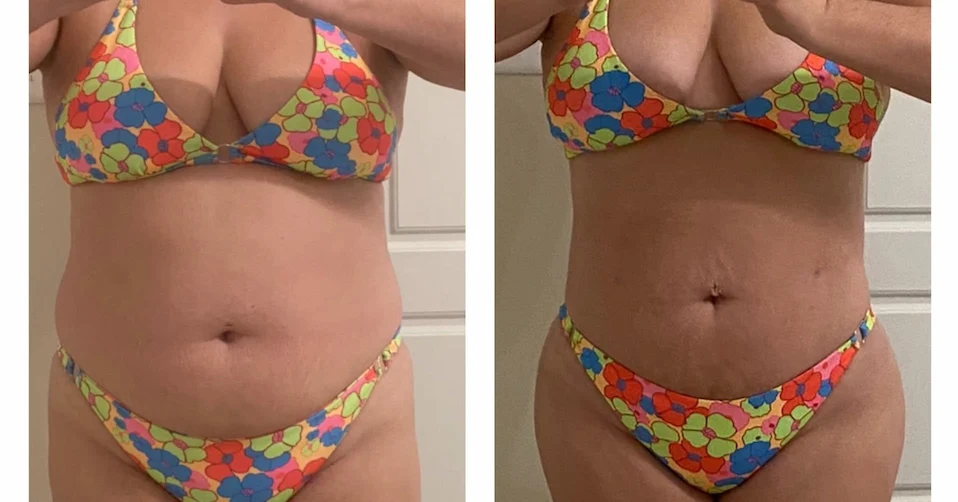
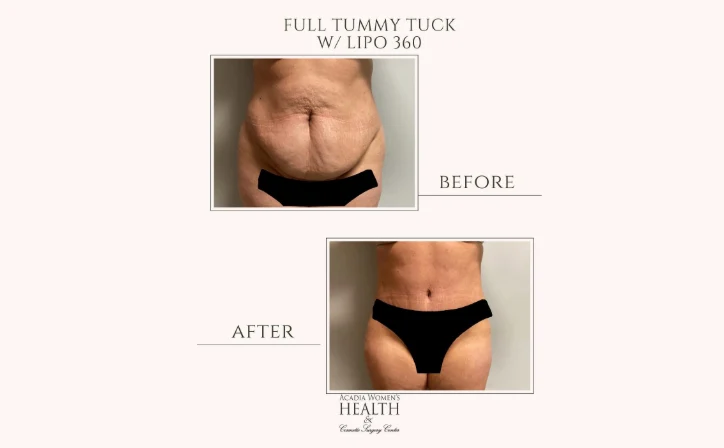
For a lot of women considering a tummy tuck, the scar is the last question standing between wanting the surgery and saying yes to it. That is a fair thing to weigh, and the photos most people study to answer it are misleading in one specific way. They show a scar at a single moment, usually an early one, and an early scar looks nothing like a finished one.
A scar you see at six weeks is nowhere near finished, because some surgical scars take up to 18 months to fully settle, according to the American Society of Plastic Surgeons. Early on it may look red, dark, raised, or rough, and that is the scar working, not the scar failing.
At Acadia Women's Health in Crowley, Louisiana, we plan the incision around your clothes and your life, not just your anatomy, and we stay with you while it heals. This article covers exactly where the line sits for each type of surgery, how it changes month by month, the care that actually makes a difference, and when to pick up the phone.
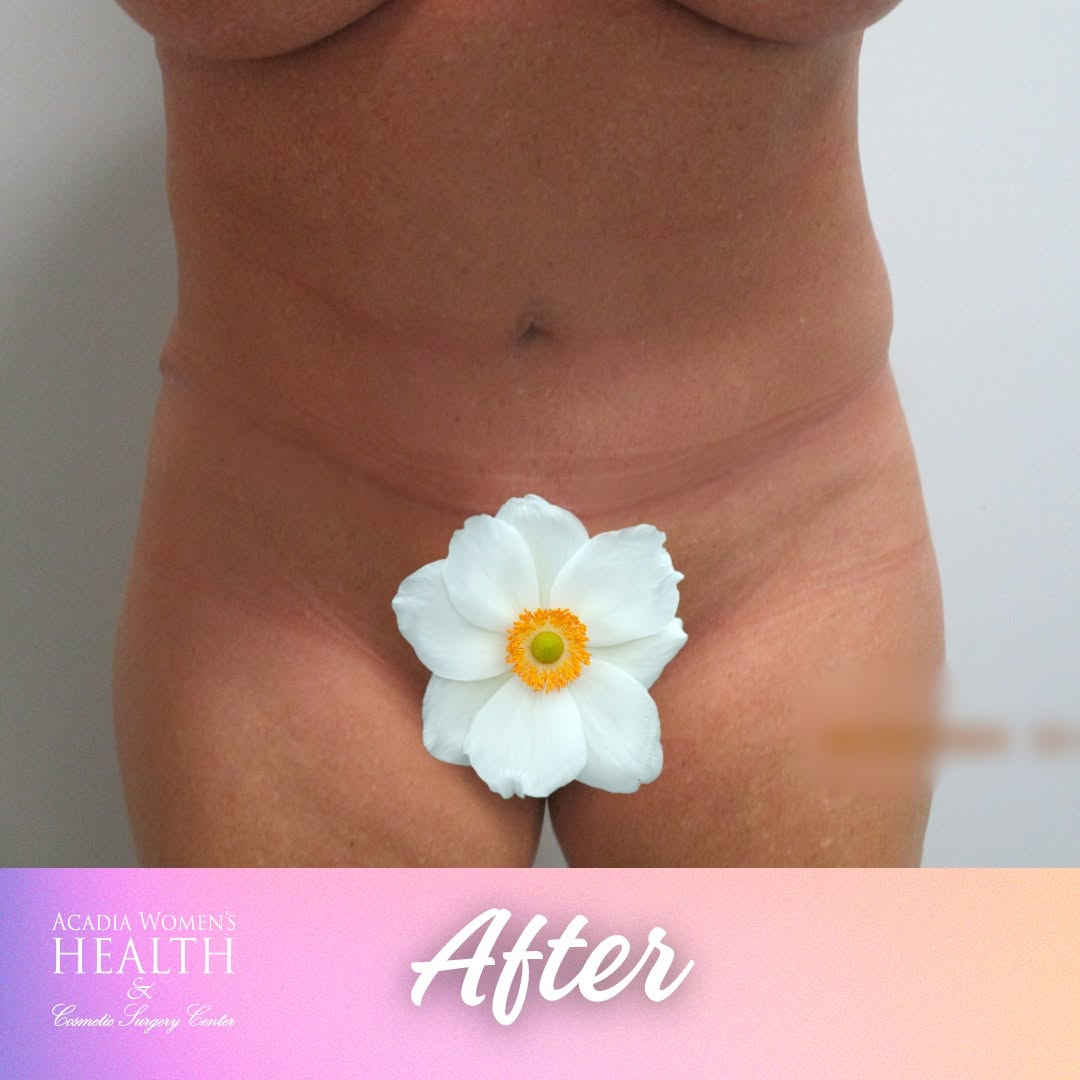
Most women end up with one main scar: a horizontal line placed low across the lower abdomen, just above the pubic area, running toward the hip bones. Your surgeon plans its height deliberately, so it sits under the waistband of your underwear and under most swimsuits.
That placement is not guesswork, and it holds. In a clinical review of 310 tummy tucks, the scar was still sitting at the same level a year after surgery as it was at one month. Where your surgeon puts the line is essentially where it stays.
The second thing that surprises women is the belly button. In a full tummy tuck the navel is not removed, it is freed from the skin around it, and the skin above is pulled down and redraped over it. That means your belly button comes through a new opening, which leaves a small circular scar around it. Our own patients tend to describe the result as smaller and neater than what they had before.
How long and how many depends entirely on how much loose skin there is and where it sits.
Type of tummy tuck
Where the incision sits
Scars you can expect
Mini tummy tuck
Low across the lower abdomen only, just above the pubic area
One short horizontal line, about the size of a C-section scar, and no navel scar
Full or traditional tummy tuck
Low from hip to hip, with the skin between the navel and pubic area removed
One long horizontal line plus a small circle around the belly button
Brazilian tummy tuck
Low across the lower abdomen, paired with fat removal to shape the waist
One horizontal line plus a few tiny openings for the fat removal
Extended tummy tuck
Longer horizontal line that continues around the hips toward the lower back
One long line that wraps to the sides, plus a navel scar
Fleur-de-lis tummy tuck
The usual horizontal line plus a vertical line up the midline
An upside-down T or anchor shape, usually after major weight loss
A mini tummy tuck uses a shorter incision, roughly the size of a C-section scar, and skips the navel scar entirely because there is less skin to move. A fleur-de-lis adds the vertical line only when skin is loose in two directions at once, which is why it comes up most often after a large weight loss. The versions we perform most often here are the mini, full, and Brazilian tummy tuck.
So can a tummy tuck be done without a scar? Honestly, no. The surgery works by removing skin, and removing skin requires an incision. A smaller operation can shorten the line and skip the belly button, but nothing erases it, and any practice promising otherwise is not being straight with you.
Dr. John Gonzalez and Dr. Michelle Owens have been caring for women in Crowley since 1999. They plan each incision around the body in front of them, and around the clothes that body actually wears.
If seeing it helps more than reading about it, our tummy tuck before-and-after gallery shows where those lines really land.
In the first days the incision usually looks pink or red, a little swollen and bruised, and feels tender and tight. It may itch, tingle, or feel oddly numb in patches. All of that is ordinary, and the soreness should ease steadily through the first couple of weeks.
Underneath, your body is working through three stages. Inflammation runs for roughly the first 48 to 72 hours, and the rebuilding stage lasts up to about six weeks. Remodeling then continues for at least a year as the new tissue reorganizes itself.
What that means in the mirror is a line that looks worse before it looks better:
Not every scar follows the same curve, and it helps to know the names for the differences. A mature scar stays inside the original incision and lies fairly flat. A widened scar is flat but broader, usually where the skin was under tension.
A hypertrophic scar is raised and thick but stays within the wound edges, typically showing up at one to three months. A keloid grows past the original wound and can appear as late as 12 months out.
Some of what shapes your result is not in your hands. Genetics, natural skin tone, and the tension across the incision all matter. A family history of keloids is worth mentioning before surgery rather than after.
Health conditions count too. A 2024 review of 15 studies covering 79,724 patients found diabetes raised the odds of wound-healing problems after a tummy tuck by about 2.5 times. That is exactly why blood sugar control beforehand is part of the plan.
One more thing worth naming, because women rarely expect it. A scar can look perfectly good and still feel strange. Tightness, numbness, itching, or a pulling sensation across the lower abdomen is common, and sensation usually keeps returning gradually over months as the nerves settle.
The best scar care is boring, consistent, and done in the right order. Doing the right thing at the wrong time is the most common way good intentions backfire, so timing matters as much as the products.
While the incision is still closing. Follow your surgeon's dressing and shower instructions exactly. Wash your hands before you touch anything, clean gently the way you were shown, pat dry, and re-cover it.
Skip hydrogen peroxide, rubbing alcohol, vitamin E, and scar products for now. The skin is not ready, and some of them slow healing. Most surgical incisions close over about two weeks, though a tummy tuck keeps building strength well past that.
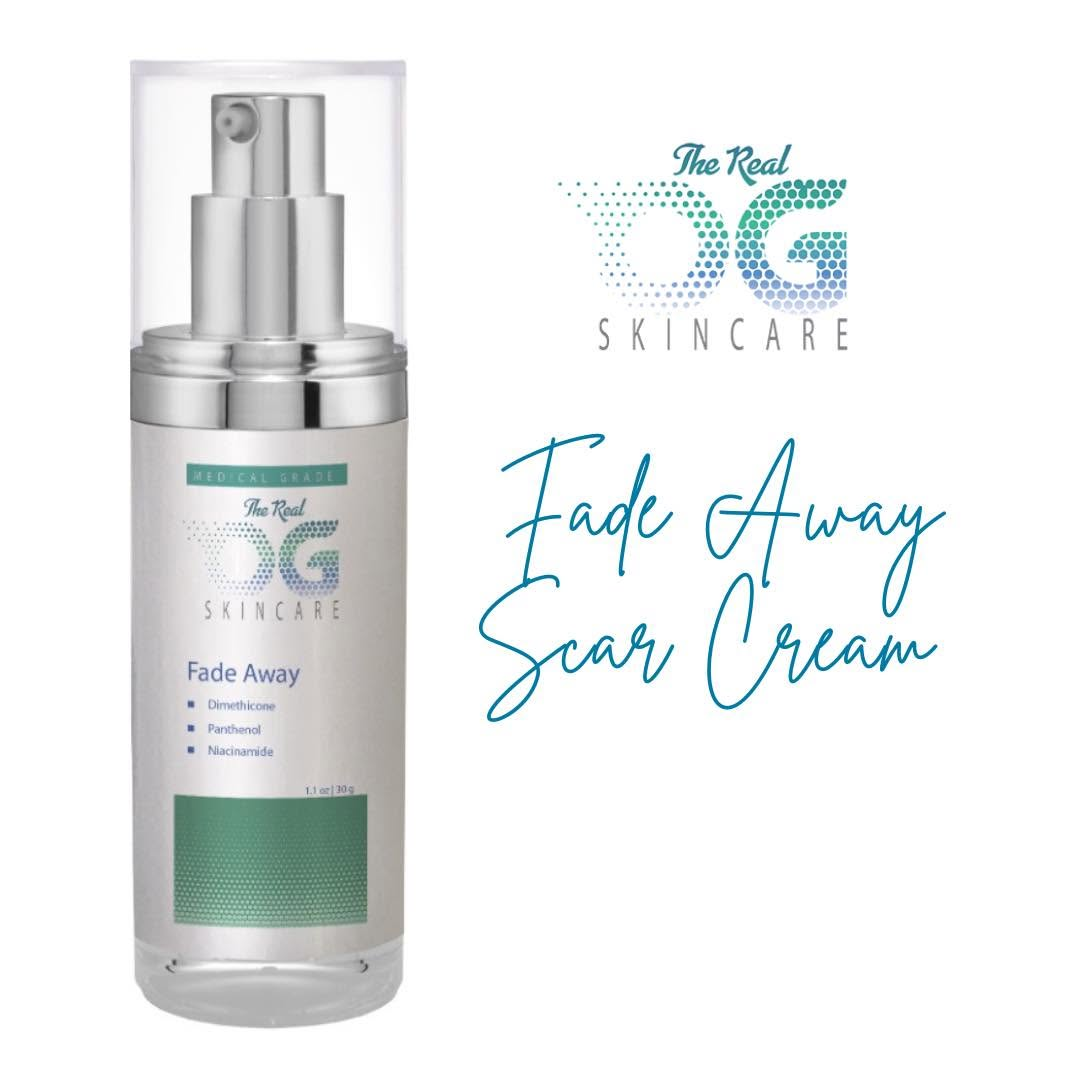
Once the skin is fully closed. When there are no open areas, scabs, or drainage left, silicone becomes worth adding. A meta-analysis of six randomized trials covering 375 patients found silicone improved the scar's color, flattened it, and left it softer and more flexible. That makes it the most evidence-backed thing you can buy.
Our own Fade Away silicone gel is the version we keep on the shelf, applied once daily to intact skin. Gentle scar massage can usually start around two to three weeks, with your surgeon's approval. Use clean fingertips and light strokes, and stop if it hurts or looks irritated.
For the whole first year. Two habits protect the line more than any cream. The first is keeping tension off it, so no heavy lifting or strenuous exercise until you are cleared, commonly around four to eight weeks. A scar that gets pulled on while it is still soft is the one that widens.
The second is nicotine. In a study of 132 tummy tuck patients, wound problems affected 47.9 percent of smokers compared with 14.8 percent of nonsmokers. Staying off nicotine through recovery is the single biggest thing within your control.
A healing scar pigments easily, so keep it under clothing, and use a broad-spectrum SPF 30 or higher once the skin is fully closed. Keep that up for 12 to 18 months.
Eating well matters more than it sounds, too. Enough protein and fluid genuinely support wound healing.
You may be wondering whether you will be left to figure all this out from a printout. You will not. At Acadia Women's Health we talk through scar care with you before surgery, and we check in on how the line is healing at your follow-up visits.
That means you can ask about the thing you noticed last Tuesday instead of guessing. Your free consultation is a one-on-one visit with one of our providers, and a good place to ask what your own skin is likely to do.
Heather shared how her incision and belly button looked at the four-week mark after surgery at our Crowley office.
"I am four weeks postop from a tummy tuck and muscle repair with Dr. Gonzalez and it has gone above and beyond anything I could have ever imagined. The recovery has been amazing and honestly so easy. My scar is pretty perfect, if scars can be beautiful it is and it healed so quickly. I have this really cute new little belly button that makes me smile every time I look at it."
If a scar is still bothering you months later, the first step is naming what kind it is, because the fix is different for each. Flat discoloration, stubborn redness, a raised ridge inside the wound edges, and a keloid spreading past it are four different problems wearing the same word.
Silicone stays the sensible first move for a raised or newly healed scar. A systematic review of 10 trials found silicone sheeting lowered the risk of hypertrophic scarring, though the studies varied widely in quality. It is inexpensive, low-risk, and worth using consistently before anything stronger is considered.
When a scar stays thick, itchy, tender, or is actively enlarging, a surgeon or dermatologist may add a steroid injection placed directly into it. That usually comes after silicone has had about two months to work. These injections often need repeating, so ask about the trade-offs beforehand, since the skin can thin or lighten at the site.
Lasers work on the parts silicone cannot reach. Pulsed-dye laser targets persistent redness and is often given monthly for two or three sessions. Fractional laser works on stiffness and uneven texture, and it usually takes a few sessions spaced about a month apart.
Expect temporary redness and swelling after those. Dermatologists frequently pair them with taping, pressure, or other in-office treatments depending on how the scar behaves.
Surgical scar revision is the last option, and it is worth being clear-eyed about what it does. Revision can narrow a widened scar, reposition one that sits too high, or release one that pulls. What it cannot do is restore untouched skin, because it always trades the old scar for a new one.
Since most scars keep maturing for 12 to 18 months, waiting about a year before choosing elective revision usually gives you the best information. The exception is a scar that is inflamed, tightening, or limiting how you move, which deserves a look sooner.
Pay attention to which way things are going. Healing should feel a little better each week, so anything that reverses that is worth a phone call rather than a wait-and-see week.
Call your surgical team the same day if you notice:
If the incision does separate, cover it with a clean dressing and call right away. Do not try to pull the edges together. Do not put peroxide, ointment, glue, or scar products on an open area unless your team tells you to.
A few things need attention but not urgency. A soft, squishy swelling with a feeling of pressure or a lopsided look usually points to a small fluid pocket rather than a scar problem. It is easily checked in the office.
The same goes for a scar that stays thick, itchy, or tender past a few months, or one creeping past the original line. Those can wait for a regular visit rather than a same-day call.
This is where being an Acadia Women's Health patient helps. Our cosmetic surgery patients get their surgeon's personal cell number, so the 9 p.m. question about whether something looks right has somewhere to go.
For everyday things you can message the team, manage appointments, or pull up your records and forms through the patient portal. And if you are ever unsure whether something counts, ask us. We would always rather look at it.
Essence described what that kind of access actually looked like during her own healing.
"My surgeon also gives his personal cell number to messages when I would randomly think of anything day or night and answer back quickly. Surgery and healing went very well and I am 150% happy with my results."
Go back to the before-and-after photos you have been studying. The difference between a line you notice and one you forget is mostly placement, patience, and a year of small habits, and a tummy tuck scar sits low for exactly that reason. Wanting to know all of this before you commit is not overthinking, it is doing this properly.
If pictures answer your questions better than paragraphs do, spend some time with real before-and-after photos of women at a similar stage, then bring what you notice with you. When you are ready to talk it through, you can reach out to our team or call us at 337-785-2006. There is no cost for the consultation and no pressure attached to it.
Acadia Women's Health has been looking after women in Crowley and across Acadiana since 1999, and a 4.9 rating across 683 Google reviews says a fair amount about how that goes. We will tell you honestly what your own scar is likely to look like, and we will be there while it heals.
Usually, yes. Your surgeon places the incision low across the lower abdomen specifically so underwear and most swimsuits cover it. Very low-cut or string-style suits may sit above it, so bring your favorite swimsuit style up at your consultation and we can plan around it.
A full tummy tuck incision runs from hip to hip, because the skin between the navel and the pubic area is being removed. A mini tummy tuck incision is much shorter, about the length of a C-section scar. The difference reflects how much loose skin needs to come out, not how skilled the surgery is.
No, and it is worth knowing that upfront. A tummy tuck removes excess skin, and skin cannot be removed without an incision. A smaller procedure can mean a shorter line and no belly button scar, but every version of this surgery leaves a mark that then fades over time.
With a full tummy tuck, yes. Your belly button stays attached where it always was, but the skin around it is pulled down and smoothed, so the navel comes through a new opening. That leaves a small circular scar that tucks into the natural shadow of the navel. Mini tummy tucks usually skip this entirely.
It looks like an upside-down T. There is the usual horizontal line low across the abdomen, plus a vertical line running up the middle. This version is used when skin is loose side to side and up and down at once, which is most common after a large weight loss.
It fades a great deal, but it does not disappear. Most scars settle into a thin, pale, flat line that blends into the surrounding skin and is easy to miss unless you are looking for it. How completely it fades depends on your skin, your genetics, and how well the line was protected during that first year.
Plan on 12 to 18 months before you judge it. The bulk of the change happens in the first six to 12 months as redness drains away and the ridge flattens, but the tissue keeps quietly remodeling after that. A scar at three months is not a preview of your final result.
Only once the incision is completely closed, with no open spots, scabs, or drainage anywhere along it. Putting silicone on skin that is not ready can irritate it. Ask your surgeon to look at the line and give you the green light rather than going by a calendar date.
It can help the scar soften and stay flexible, and many surgeons approve it around two to three weeks once the incision is fully closed. Use clean fingertips and light pressure in small circles and along the line. If it hurts, stings, or leaves the area red and angry, stop and check in with your team.
Yes, and this is one of the easier problems to avoid. New scar tissue pigments much more readily than normal skin, so a few unprotected afternoons can leave a line noticeably darker for a long time. Keep it covered, and once the skin is closed, use a broad-spectrum SPF 30 or higher for the first 12 to 18 months.
The evidence for vitamin E on surgical scars is weak, and for some people it causes skin irritation that makes things worse. Silicone has far better research behind it. Do not put vitamin E or any other product on a healing incision unless your surgeon has specifically recommended it.
Call your surgical team the same day, cover the area with a clean dressing, and leave it alone otherwise. Do not pull the edges together or apply peroxide, ointment, or glue. Small separations often heal well with the right wound care, and at Acadia Women's Health you have your surgeon's cell number for exactly these moments.
Disclaimer: This article is for general educational purposes only and is not medical advice. Reading it does not create a physician-patient relationship. Every patient is different, individual results vary, and no outcome is guaranteed. Talk with a qualified physician about your specific situation before making any treatment decision.

Written by
Cosmetic Surgeon, Board-Certified Urogynecologist
Fellow of the American Academy of Cosmetic Surgeons; Fellow of the American College of Obstetricians and Gynecologists. Medical Degree: University of Miami School of Medicine; Residency: Orlando Regional Healthcare System as Chief Resident.
Our board-certified team offers personalized, judgment-free consultations to help you decide what's right for you.
RECENT POST
BROWSE BY CATEGORY
VISIT US
527 Odd Fellows Road STE B
Crowley, LA 70526
(337) 514-4369
Mon – Thu 8:00 – 5:00
Friday 8:00 – 12:00