Acadia Women's Health
October 30, 2026
min read

A panniculectomy and a tummy tuck both remove the apron of skin that hangs over the lower abdomen, but only one of them also tightens the muscle wall underneath. Which one you need depends on what is actually bothering you, and that is the part most search results skip. By the time women start looking into surgery, the fold is usually more than a cosmetic complaint. It is the rash that keeps coming back, the drying and powdering after a shower, the clothes that stop fitting, and wanting that gone is a fair reason to ask.
Those daily problems are the part that measurably improves. In one study, 46 patients answered the same questions about daily life before and after surgery, and every area improved.
We are Acadia Women's Health, a women's practice in Crowley, Louisiana, and we talk with women across Acadiana who are trying to understand the difference before they decide what to ask for. This article explains what an apron belly is, how the two operations differ, which one fits which goal, what recovery looks like, and how to plan for the cost.
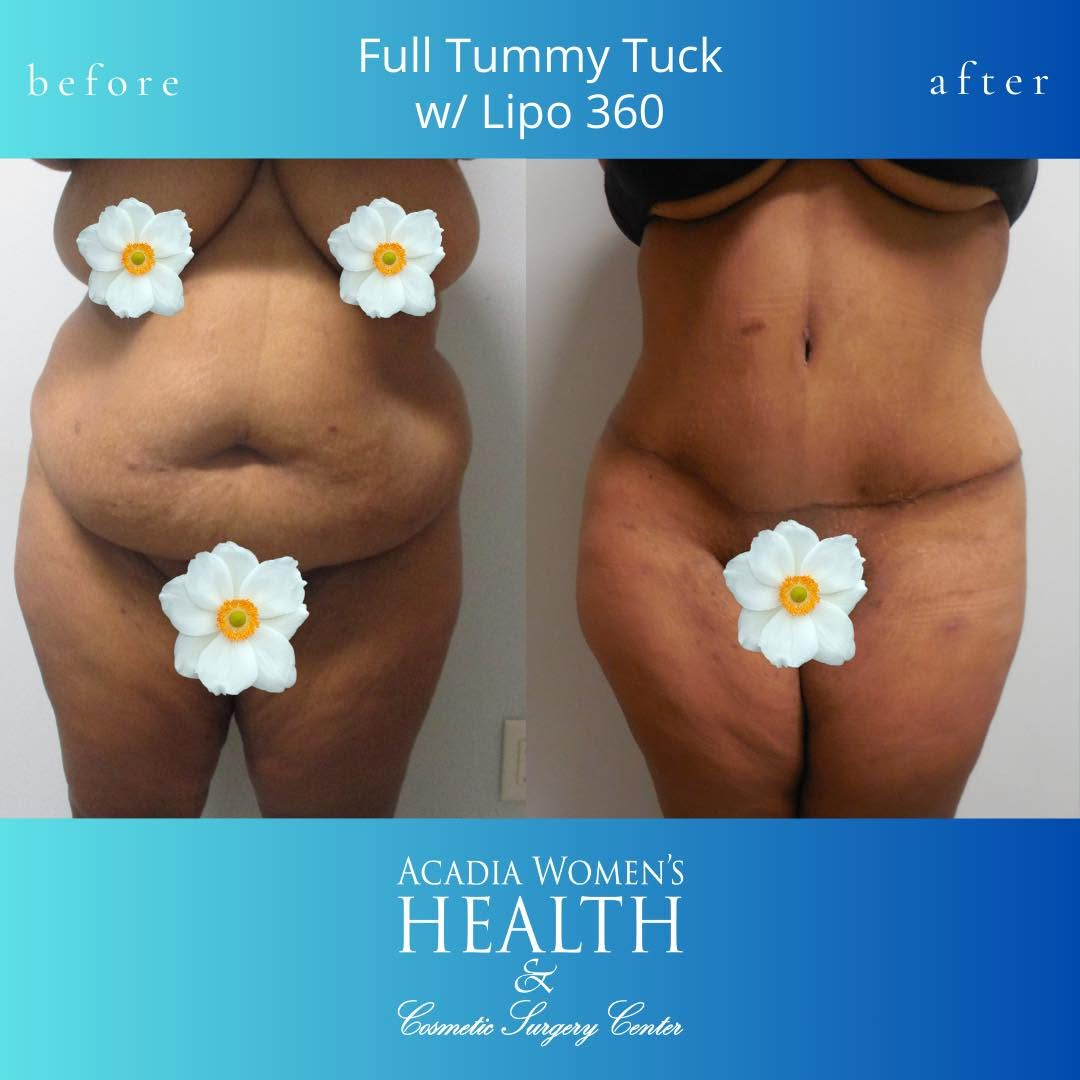
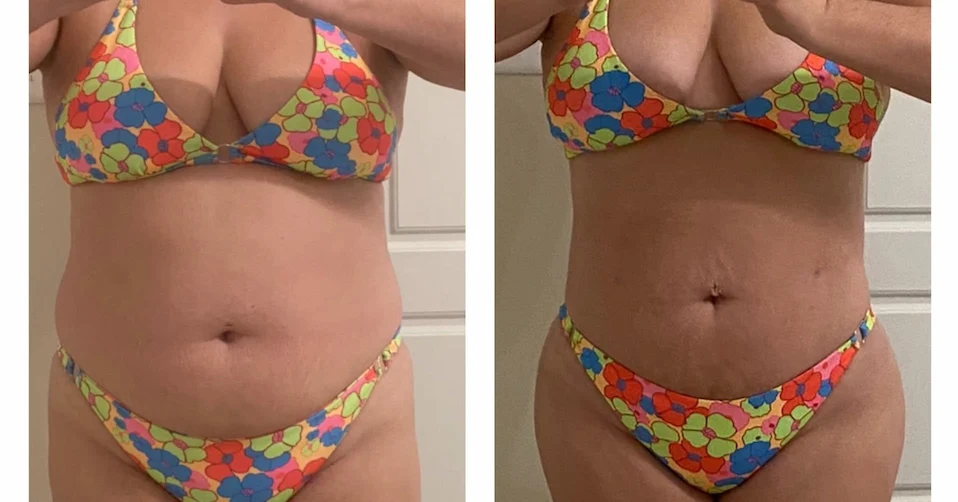
An apron belly, called a pannus or abdominal panniculus in medical charts, is an overhanging fold of loose skin and the soft fat underneath it that hangs down from the lower abdomen. Depending on how much tissue is there, it can drape over the pubic area, the hips, or further down the thighs.
Size matters less than what the fold does to your day. A heavy pannus can change how you walk, make bending awkward, and get in the way of exercise. Clothes stop fitting the way sizes suggest they should. The weight of the tissue pulling forward can also add to lower-back ache.
Then there is the skin itself. Where skin rests against skin, heat and moisture get trapped, and friction does the rest. That combination causes intertrigo, the medical word for the red, itchy, raw irritation that shows up in a fold. When it keeps coming back, it can progress to sores or a fungal or bacterial infection.
None of that responds well to more effort. After a large weight loss, the skin has been stretched over more of you for a long time, and stretched skin only recoils so far. The American Society of Plastic Surgeons looked at the nonsurgical options in its practice guideline and found little evidence that creams, devices, or exercise do much for loose, hanging skin.
If you have been quietly wondering whether you simply did not work hard enough, this is the part worth hearing plainly. A fold that already exists is a structural change, not a willpower problem.
One thing both operations have in common is what they are not. Neither is a weight-loss treatment. Surgeons generally want your weight settled first, because the goal is to remove tissue that is not going to change on its own.
The short answer is that a panniculectomy removes, and a tummy tuck removes and rebuilds. A panniculectomy takes out the hanging wedge of skin and fat below the belly button and closes the incision. It does not ordinarily tighten the abdominal wall, and it does not create a new opening for the navel.
A tummy tuck, or abdominoplasty, starts from the same place and keeps going. It removes the loose skin and fat, then usually repairs the muscle wall by stitching the two vertical muscle columns back toward the midline. It also redrapes the skin over the whole abdomen rather than just the lower shelf.
That muscle step is the real dividing line, and it explains a lot of confusion. Pregnancy and rapid weight change can pull those two muscle columns apart down the middle, a bit like a zipper coming undone. No amount of core work draws them back together, which is why a stomach can still push forward even after the skin is gone. A panniculectomy leaves that separation as it is.
Panniculectomy
Tummy tuck
Main target
The hanging apron below the navel
Loose skin plus the muscle wall and overall shape
Muscle repair
Not usually included
Commonly included
Skin above the navel
Generally left alone
Usually lifted and redraped
Belly button
Left as it is
Kept in place, brought through a new opening
Typical goal
Relief from the fold
A flatter, tighter abdominal contour
The belly button question comes up constantly, and the answer is reassuring. Your navel is not removed in a tummy tuck. It stays where it is anatomically while the skin around it is smoothed and redraped, so it needs a new opening to come through, which is why it often looks tidier afterward.
Heather named all three of these pieces in one review, the hanging tissue, the muscle repair, and the navel.
"I am four weeks postop from a tummy tuck and muscle repair with Dr. Gonzalez and it has gone above and beyond anything I could have ever imagined. The recovery has been amazing and honestly so easy. My scar is pretty perfect, if scars can be beautiful it is and it healed so quickly. I have this really cute new little belly button that makes me smile every time I look at it. My mommy pouch is gone and so is all of my back pain I was carrying around from everything that was hanging off of the front of me."
Our own tummy tuck options split along similar lines. A Brazilian tummy tuck concentrates on the lower abdomen, combining liposuction with skin removal while leaving the muscle wall alone. A traditional tummy tuck removes the skin between the navel and the pubic area from hip to hip and tightens both the upper and lower abdominal wall.
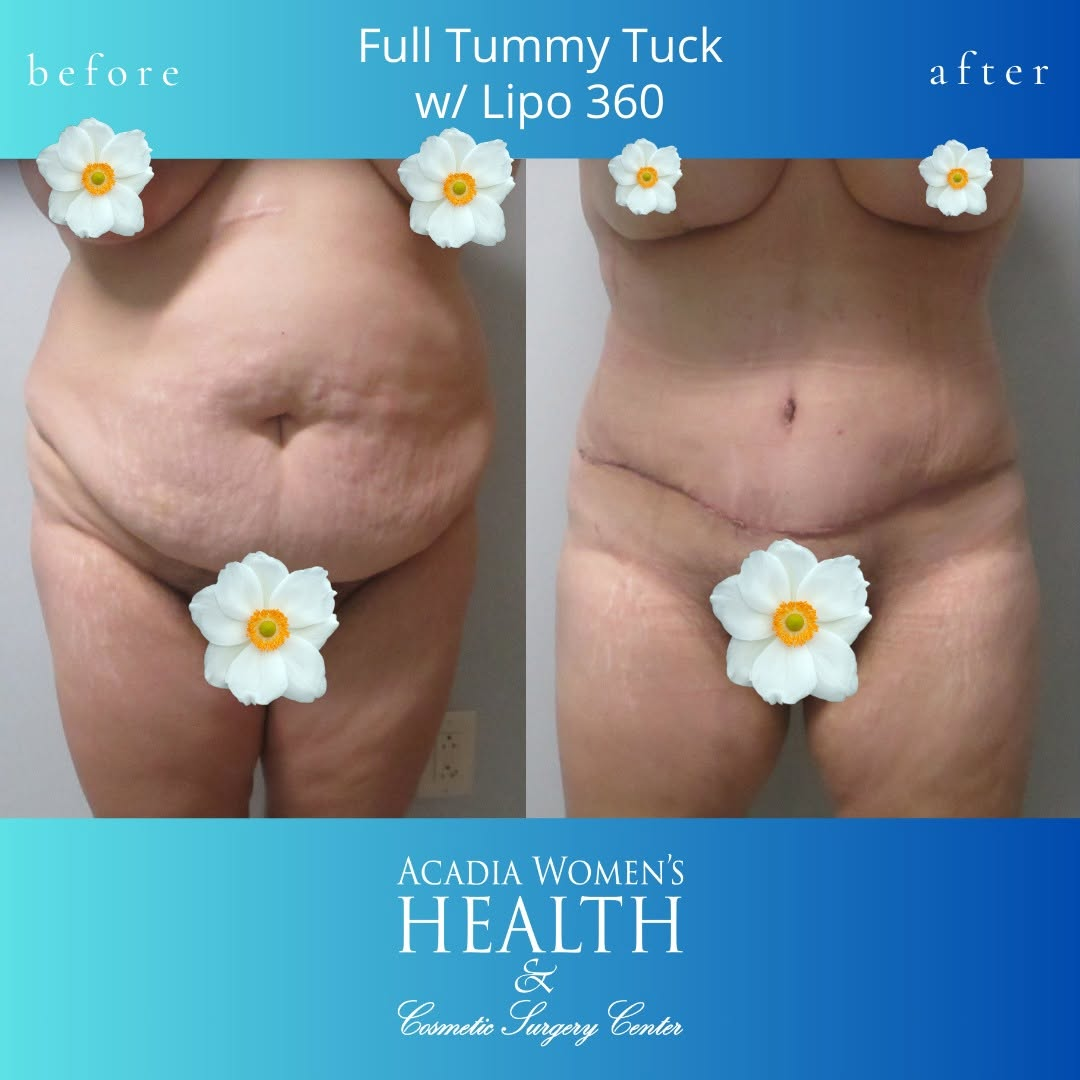
Start with what is actually driving you, because that answers the question faster than any measurement does. If the fold itself is the problem, the recurring rash, the rubbing, the way it limits how you move, then removing the apron is the goal and everything else is secondary. If what you picture is a flatter waist and a stomach that holds its shape in clothes, the muscle repair is the part that gets you there. That points toward a full tummy tuck.
Weight stability comes next, and it matters more than the number on the scale. Guidance generally points to weight holding steady for several months before body contouring, and longer after bariatric surgery. Waiting until your weight settles is what protects the result you are paying for, because if your weight moves much afterward, the skin can loosen again.
Your health history shapes candidacy just as much. Smoking narrows the small vessels that feed a healing incision, and diabetes and blood-sugar control affect how well a long closure knits together. One study of 11,137 people having this kind of surgery found that those who went in with more health problems had more trouble healing afterward. Future pregnancy is worth naming too, since a pregnancy after muscle repair can stretch it again.
This is also where who does the surgery starts to matter. Our practice was built by Dr. John Gonzalez and Dr. Michelle Owens, who have cared for women in Crowley since 1999. Dr. Gonzalez is board certified in obstetrics and gynecology by the American Board of Obstetrics and Gynecology, one of the recognized national medical boards, and is a Fellow of the American Academy of Cosmetic Surgery. He has more than 25 years in practice and is the only full-time board-certified urogynecologist in the Acadiana area.
Both operations are usually done under general anesthesia, so you are asleep and feel nothing during the procedure itself. Surgeons often add a regional block to the abdominal wall, which keeps the area numb into the first part of recovery and reduces how much pain medication you need afterward.
The incision sits low, running horizontally just above the pubic area and extending toward the hips. A tummy tuck adds the small circular incision around the repositioned navel. How far the incision travels depends on how much tissue is being removed, which is why two women can leave with noticeably different scar lengths from the same named operation.
Small drains are usually placed under the skin for a few days to carry off fluid while the tissue settles. You will also wear a compression garment or binder that supports the repair and helps control swelling. Neither is glamorous, and both make a real difference in how the first weeks go.
The first several days are the most uncomfortable, with tightness, soreness, and swelling rather than sharp pain. Most women describe it as manageable, and muscle repair does make that first week tighter, because the abdominal wall is genuinely holding a new position. Light walking starts early, often the same day or the day after, since moving helps circulation.
Stage
Roughly when
What it usually looks like
First few days
Days 1 to 5
Most soreness and swelling, drains in place, short walks
Early recovery
Weeks 1 to 2
Desk work and light daily activity for many women
Restricted phase
Through about week 6
No strenuous activity or heavy lifting
Settling
Months 2 to 6
Swelling resolves gradually, contour becomes clear
Scar maturing
6 to 12 months and beyond
Line softens and fades toward a pale, flat mark
Natalie came to us after losing more than 100 pounds, which is the situation many women reading this are in.
"I am thrilled to share my experience with Dr. G, who performed my tummy tuck and arm lift after I lost over 100 pounds. I can wear clothes I never imagined I could again. The recovery process was smooth, and Dr. G's follow-up care was exceptional."
Staying in touch through that first stretch is simple. You can message the team, manage your follow-up appointments, and pull up your records or forms through the patient portal.
Both operations are real surgery, and being straight about that is more useful than reassurance alone. The risks after a tummy tuck are bleeding, fluid collecting under the skin, slow healing at the incision, changes in how the skin feels, and blood clots. That is why surgeons screen carefully beforehand and get you walking early.
Healing problems cluster around the incision more than anywhere else, and the reason is mechanical. A long closure across the lower abdomen sits under tension, and the blood supply to the skin edges has to travel further after a large amount of tissue is lifted. That is why wound healing, rather than anything dramatic, is what surgeons watch most closely in the weeks after this surgery.
How likely any of that is depends a great deal on who is having the surgery. Active smoking, diabetes, and poor nutrition are the factors that show up again and again, and they are also the ones you and your surgeon can work on together before a date is set. Stabilizing weight, stopping smoking well ahead of surgery, and getting blood sugar in range genuinely change the odds in your favor.
Scars are the trade you make, and they are permanent. Expect a low horizontal line extending toward the hips, plus a small scar around the navel if the belly button is repositioned. Most cosmetic surgery scars fade significantly over the first 6 to 12 months into soft, pale lines, and the abdominal incision is placed low enough that most underwear and swimsuits cover it. We talk through scar care before surgery and check in with you as you heal.
Knowing what deserves a phone call takes the guesswork out of the first weeks. Increasing pain or swelling, spreading redness, drainage from the incision, fever, or calf pain and shortness of breath all warrant calling the office right away. Cosmetic surgery patients also leave with the surgeon's personal cell number, so reaching someone who knows your case is never a matter of waiting for business hours.
There is no single price, and any practice that gives you one over the phone is guessing. What you pay tracks the scope of the operation, which means how much tissue is removed, how long you are in surgery, and whether muscle repair or liposuction is part of the plan. Two women with the same diagnosis can have very different quotes because they are having different amounts of surgery.
A complete quote should account for more than the surgeon's fee. Anesthesia, the surgical facility, pre-operative labs, your compression garment, and follow-up care all belong in the number. At Acadia Women's Health, our surgical suites are in-house and accredited, which keeps the facility piece inside one plan instead of scattered across outside bills.
Adding muscle repair or liposuction lengthens the operation and raises the total. Scope also affects safety, not just price, which is part of why surgeons sometimes recommend staging the work rather than stacking everything into one long surgery.
Now the plain part, and it is usually why women search the medical term at all. Panniculectomy sounds like a covered procedure, but the name does not settle the question. Insurance generally does not cover cosmetic surgery, and we do not file our cosmetic procedures with insurance.
A tummy tuck is an out-of-pocket procedure, which is exactly why we offer flexible financing options through Cherry, Affirm, and CareCredit, along with layaway plans and a 4 percent discount when you pay cash. Cherry runs no hard credit checks and offers 0 percent APR options for those who qualify.
Budgeting for the recovery matters as much as budgeting for the surgery. Time away from work, help with children or the household for the first week or two, medications, and garments are all part of the real cost. Your free consultation is where a tummy tuck plan gets built around your body and your actual number gets worked out, not estimated.
Kelli put the value question in her own words after her surgery with Dr. Owens.
"I had a great experience with Dr. Owens and her team. The kindness and compassion from her made me feel comfortable and welcoming. Her work is amazing. I am completely satisfied with the results of my tummy tuck surgery. I absolutely love my body and I highly recommend her and her team at Acadia Women's Health."
Those daily problems are a legitimate reason to look into surgery, and you do not need a better one. A tummy tuck removes the apron and rebuilds the muscle wall underneath it, while apron removal alone addresses the fold and leaves the rest as it is. Knowing which of those you actually want is most of the decision.
A good next step costs nothing. Looking through real before and after photos of women who started where you are makes it much easier to picture your own result.
When you are ready, you can reach out to our team for a one-on-one visit with one of our providers.
Acadia Women's Health has been caring for women in Crowley and across Acadiana since 1999, and we understand the body you have and the body you want. Whenever the timing is right for you, we are here, and you can reach us at 337-514-4369.
Yes. Removing the hanging apron of skin and fat below the navel is the entire point of the operation. What it does not do is tighten the abdominal muscles or reshape the upper abdomen, so the fold goes and the underlying shape stays much as it was.
It does, and then some. A tummy tuck removes the same hanging tissue and usually adds muscle repair and a full redraping of the abdominal skin. If the apron is your only concern, that extra work may be more than you need. If shape matters to you, it is the part that delivers it.
The muscle wall. A panniculectomy removes tissue and closes. A tummy tuck removes tissue and also stitches the separated abdominal muscles back toward the midline, which is what flattens a stomach that still pushes forward after the skin is gone.
No, not ordinarily. It is designed as a removal procedure, so any separation in the abdominal wall remains afterward. Women who want that separation addressed generally need abdominoplasty instead.
Usually yes. Repairing that separation, called diastasis recti, is a standard part of a full tummy tuck and one of the main reasons women choose it. The two vertical muscle columns are stitched back toward the center to rebuild the support you feel when you stand.
Elements of both are often combined in one plan, since they work on the same area through a similar incision. Whether that is wise for you depends on how much tissue is involved, your health history, and how long you can safely be in surgery. Some women are better served by staging the work.
Both come up, and the choice depends on what the weight loss left behind. A large, heavy apron causing rubbing and rashes points toward apron removal. Loose skin combined with a stretched muscle wall usually points toward a full tummy tuck.
Removing the fold removes the skin-on-skin contact that causes the trouble in the first place, so the irritation typically has no place to develop afterward. Many women say this is the change they notice first, well before they notice their shape.
Your navel is not removed. It stays where it belongs anatomically while the skin around it is smoothed and redraped, so it comes through a new opening. Most women find it looks neater afterward than it did before.
Neither operation is a weight-loss procedure, and it is better to plan around that than to be surprised by it. The tissue removed does have weight, and how much varies widely from one woman to the next. The meaningful change is in comfort, fit, and shape rather than in the number on the scale.
The arcs are similar. Many women manage desk work and light daily activity after one to two weeks, avoid strenuous activity for about six weeks, and see swelling settle over several months. Muscle repair generally makes the first week tighter, so a full tummy tuck often feels like the slower start.
A low horizontal scar running toward the hips, plus a small one around the navel if it was repositioned. Scars are permanent, but they typically fade over 6 to 12 months into soft, pale lines, and the abdominal incision is placed low enough that most underwear and swimsuits cover it completely. Our tummy tuck patients at Acadia Women's Health talk this through at the free consultation, where the likely incision length is mapped out for your body.
Disclaimer: This article is for general educational purposes only and is not medical advice. Reading it does not create a physician-patient relationship. Every patient is different, individual results vary, and no outcome is guaranteed. Talk with a qualified physician about your specific situation before making any treatment decision.

Written by
Cosmetic Surgeon, Board-Certified Urogynecologist
Fellow of the American Academy of Cosmetic Surgeons; Fellow of the American College of Obstetricians and Gynecologists. Medical Degree: University of Miami School of Medicine; Residency: Orlando Regional Healthcare System as Chief Resident.
Our board-certified team offers personalized, judgment-free consultations to help you decide what's right for you.
RECENT POST
BROWSE BY CATEGORY
VISIT US
527 Odd Fellows Road STE B
Crowley, LA 70526
(337) 514-4369
Mon – Thu 8:00 – 5:00
Friday 8:00 – 12:00