Acadia Women's Health
August 25, 2026
min read

Pregnancy, breastfeeding, and weight changes often affect the breasts and the abdomen at the same time. The breasts can lose volume and begin to sag, while the skin and muscles of the midsection stay stretched even with consistent diet and exercise.
Because these changes tend to happen together, many women consider breast augmentation alongside work on the midsection, rather than treating one area at a time. Patient satisfaction with this approach is high: in one American Society of Plastic Surgeons report, 94 percent of body-contouring patients said they were satisfied, and almost all said they would choose it again.
At Acadia Women's Health in Crowley, Louisiana, we help women across Acadiana plan breast and tummy work in a way that fits their body and their life. This guide covers what the combination involves, who it suits, the results and recovery you can expect, and how the cost comes together.
This combination treats two or three areas in one surgery. It targets the changes that pregnancy, breastfeeding, and weight loss leave behind, so you recover once instead of several times. Many women know it by another name: a mommy makeover.
Each part does a specific job, and they are easy to mix up. A breast augmentation adds volume with a saline or silicone implant, restoring size and fullness that breastfeeding or weight loss can take away. The implant is placed through a small opening tucked into the fold under the breast.
A breast lift does something different. It raises and reshapes breasts that have started to sag and repositions the nipple, but on its own it changes the shape of your breasts, not their size. That is why a lift and an implant are often done together, one to lift and one to restore fullness.
A tummy tuck works on the midsection. It removes loose, extra skin and tightens the abdominal muscles that pregnancy can stretch and separate. That is what flattens a stomach that will not respond to sit-ups.
Here is a quick way to keep the pieces straight.
Procedure
What it does
Who it tends to suit
Breast augmentation
Adds volume and fullness with an implant
Breasts that lost size after nursing or weight loss
Breast lift
Raises and reshapes sagging breasts, without changing size
Breasts that sit low, with the nipple below the crease
Tummy tuck
Removes loose skin and tightens stomach muscles
A midsection stretched by pregnancy or weight change
Choosing a combination is a personal decision, and there is no wrong reason to want to feel comfortable in your own skin again. The point is to shape a plan around what actually bothers you, not a package someone hands you.
The short answer is that good candidates are healthy, close to a stable weight, and generally finished having children. If a future pregnancy is still in your plans, it makes sense to wait, because carrying another baby can stretch the same muscles and skin you just had tightened. Waiting until your family feels complete is the surest way to protect your results.
Weight matters too, though not in the way you might fear. This is not about being a certain size. It is about being at a weight you can hold steady, since large swings afterward can loosen skin that surgery just tightened. If you are still losing, getting closer to your goal first tends to give a smoother, longer-lasting result.
Timing after a baby is a common question. Most women are ready once they have finished breastfeeding and their weight has leveled off, which is often several months after nursing ends. Your body has its own pace, and there is no prize for rushing it.
A few health factors can make staging the safer choice. Conditions like uncontrolled diabetes, a higher body mass index, or smoking can slow healing. In those cases, your provider may suggest doing the procedures in two steps, or waiting until things are more settled.
None of this is a verdict on you. It is simply how a careful team keeps you safe.
The best way to find out where you stand is a conversation. At Acadia Women's Health, a free consultation is a one-on-one visit with one of our providers. They examine you, listen to your goals, and lay out an honest plan, including whether one surgery or two makes more sense for you. You will hear about financing options like Cherry, Affirm, and CareCredit in the same visit, so cost is never a mystery.
When you are ready, you can book your free consultation with no pressure to decide that day.
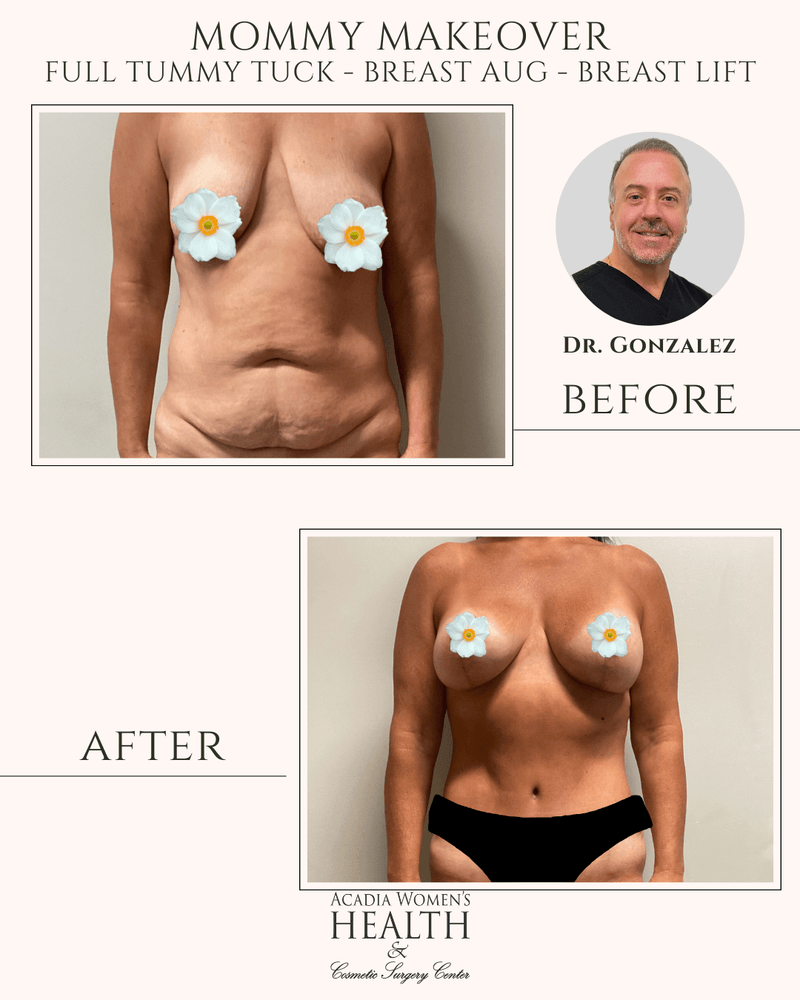
Picture the two changes together: breasts that sit higher and fuller, and a midsection that looks flatter and feels firmer when you stand up straight. That is the goal of this combination, and for most women the payoff is not just the mirror. It is fitting into clothes again and feeling at ease in your own body.
Results do not arrive all at once, and that is normal. In the first weeks, swelling hides the final shape, and the breasts often sit high before they soften and settle into a natural position. Give it time. Most of the swelling fades over the first few months, and the final look tends to settle in over about a year.
How long it lasts comes down to a few things you can influence. A tummy tuck removes skin for good, so as long as your weight stays steady, a flatter midsection holds well over the years. Implants are not lifetime devices and may need attention down the road, but many women enjoy their results for a decade or more. Keeping a stable weight and staying active are the biggest favors you can do for your outcome.
One woman who had this exact combination shared how it came together.
Adelaide had a tummy tuck and a breast augmentation together, and described how natural the result felt at Acadia Women's Health.
"I had a tummy tuck with LIPO 360 and a breast augmentation. The results are SO natural with the breast augmentation and that's EXACTLY what I wanted, and for someone who has always had a stubborn mid section to see a flat stomach on me has just been mind-blowing. I'm only two weeks out and can already see how fine and thin the scar will be, he really couldn't have done a more beautiful job and you can see the true attention to detail he has with his work."
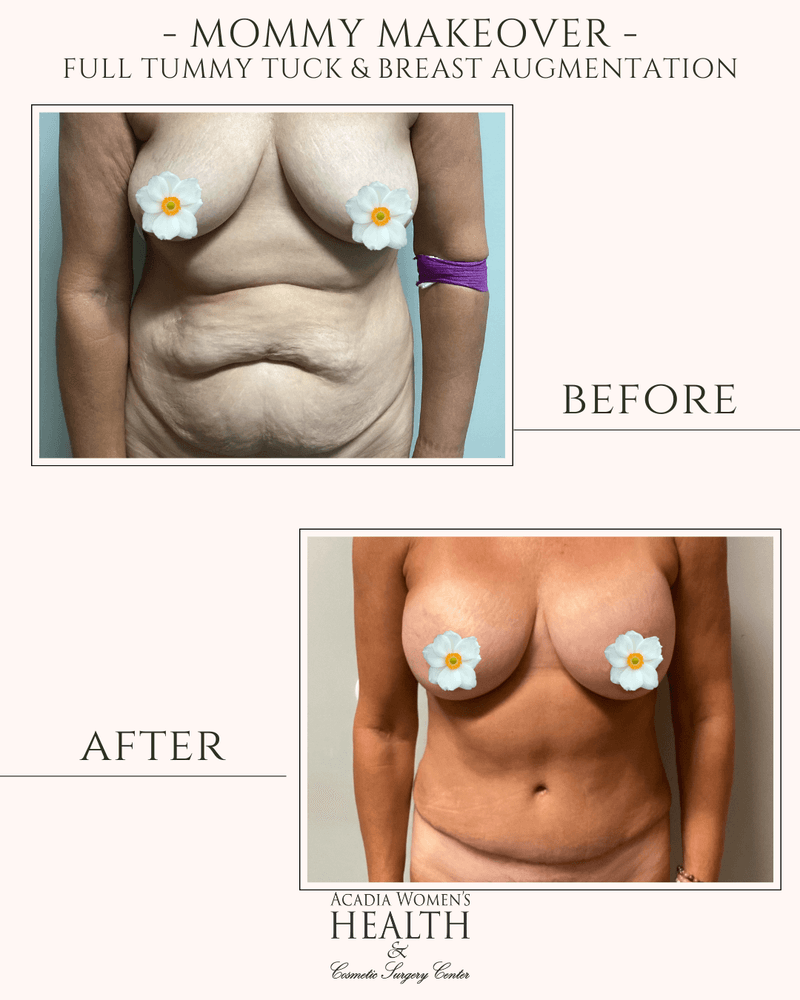
If seeing is what helps you picture your own outcome, our before-and-after photos show real patients who chose to combine procedures.
The honest answer is that there is no single price, and any number you see online is a stand-in at best. The cost of this combination is built around your body and your plan: how many procedures you choose, how much work each one involves, and the time in the operating room. That is why a real figure comes from an exam, not a phone quote.
It helps to see what actually makes up the bill. The surgeon's fee is only the base charge. On top of it, come the operating facility, anesthesia, your implants if you are having augmentation, lab work, garments, and follow-up care. Each is its own line item, which is part of why a combined plan cannot carry one flat price.
Here is where combining pays off. Because everything happens in one surgery, you generally pay a single anesthesia and facility fee instead of two, and you go through one recovery instead of two. That is a real reason so many women choose to combine rather than stage.
To picture how a starting price differs from a final bill, look at a single procedure. Our breast augmentation begins at $3,600 for the base surgery, and the full total for saline implants is $3,950 once you add meds, labs, and the facility fee. That is one procedure at cash pricing, not the price of a full combination, but it shows how the pieces stack up into a real number.
These are out-of-pocket cosmetic procedures, and we do not file them with insurance, so we focus on making them manageable instead. You can explore flexible financing through Cherry, Affirm, and CareCredit. Several offer monthly payments and 0 percent options, so the cost can fit your budget rather than the other way around.
Recovery from a combined surgery asks more of you than a single procedure, mostly because two areas are healing at once. The good news is that it moves in predictable stages, and knowing what each one feels like takes a lot of the worry out of it. You will not be on your own figuring it out.
The first few days are the hardest, and that is expected. You will feel sore and tired, your midsection will feel tight, and you will move slowly and a little bent at the waist to stay comfortable. Rest, short walks around the house, and help with the kids make this stretch far easier.
Most women with desk jobs are back to light work in one to two weeks, and driving resumes once you are off prescription pain medication and can move freely. You will wear a compression garment and a supportive surgical bra to help the swelling settle, usually for several weeks. Heavier lifting and real workouts wait a bit longer, generally around four to six weeks, and your team will clear you before you push it.
Swelling comes down gradually over the first few months, and the final shape keeps refining for up to a year. Scars fade and flatten over that same stretch. We do not hand you a separate scar-care packet, but we talk through scar care before surgery and check in with you as you heal, so you always know what is normal.
The relationship does not end at the operating room door, which is a big part of how our patients describe recovering here. If a question comes up between visits, you can message the team through the patient portal, and your follow-up appointments are built into your plan from the start.
Heather found the recovery easier than she expected, and felt cared for the whole way through.
“I am four weeks postop from a tummy tuck and muscle repair with Dr. Gonzalez and it has gone above and beyond anything I could have ever imagined. The recovery has been amazing and honestly so easy. My scar is pretty perfect. My mommy pouch is gone and so is all of my back pain I was carrying around. I could not have asked for a more caring doctor/staff. I think their years of women's health makes them even better at this kind of cosmetic work. You're not just another surgery number. They know you, they remember you."
It is smart to ask whether doing everything at once is safe. Every surgery carries some risk, and a longer operation under general anesthesia is a fair thing to think about. Under general anesthesia you are fully asleep and feel nothing. Surgeons also keep a combined operation to a safe length, planning the day so you are not under longer than needed.
The bigger question most women have is whether combining raises the odds of a problem. Reassuringly, the research is steady on this point. A large study of nearly 59,000 patients found that pairing breast and abdominal surgery, in carefully selected healthy patients, was about as safe as having the abdominal surgery on its own. Choosing the right candidate is what keeps it that way.
That is exactly why some women are better served by staging. If you have a higher body mass index, diabetes, or you smoke, doing the procedures in two steps lowers the strain on your body and gives each area a cleaner recovery. Hearing that a two-step plan fits you better is good news, not a setback. It is your team protecting the result you came for.
There is also plenty you can do to stack the odds in your favor. Stopping smoking several weeks ahead, staying active, and moving soon after surgery all help you heal well. They also lower the small risk of a blood clot. Your provider will walk you through your own checklist, so nothing is left to chance.
Where your surgery happens matters as much as who performs it. At Acadia Women's Health, procedures are done in our own accredited surgical suites. The practice was built by cosmetic surgeons with decades of experience.
Dr. John Gonzalez, MD, is board certified in obstetrics and gynecology by the American Board of Obstetrics and Gynecology, and a Fellow of the American Academy of Cosmetic Surgery. He brings more than 25 years of experience, and was among the first in Acadiana to perform breast augmentation in the office. That mix of setting and experience is what lets our team keep you safe while working toward the result you came for.
If you started this article seeing two things you wanted to change, you now know they can be addressed together, thoughtfully and safely. A breast augmentation with a lift or a tummy tuck is a real way to feel like yourself again. The right plan is the one built around your body, your timing, and your goals.
A good next step is simply to look and to ask. Browsing before-and-after photos can help you picture your own result, and a no-pressure conversation can answer the questions that keep circling in your mind. When you are ready, you can reach out to our team to talk it through, or call the office at (337) 514-4369.
At Acadia Women's Health in Crowley, we understand the body you have and the body you want. We would be glad to help you decide what is right for you, on your timeline. There is no rush, only a team here in Acadiana ready when you are.
Most women return to desk work within one to two weeks and ease back into normal activity over the first month. Swelling settles over a few months, and the final shape keeps refining for up to a year. Recovery from a combined surgery takes a little longer than a single procedure, since two areas are healing at the same time.
Yes, pregnancy is still possible, but it can undo some of your results by stretching the skin and muscles again. That is why surgeons generally recommend waiting until you are finished having children. If another pregnancy is still a possibility for you, it is worth talking through the timing at your consultation.
For healthy patients who are carefully selected, combining breast and abdominal surgery is generally about as safe as having the abdominal procedure alone. For others, such as those with certain health conditions or a higher body mass index, staging the surgeries is the safer path. Your provider weighs your health and goals to recommend the approach that protects you best.
Many tummy tucks use small temporary drains to keep fluid from collecting while the area heals, and they are usually removed within a week or two. Whether you need them depends on your procedure and your surgeon's technique. Your team will explain exactly what to expect and how to care for anything you go home with.
For the first several weeks, it is best to avoid lifting anything heavy, often more than five to ten pounds, which includes small children. Pushing too soon can strain healing muscles, especially after a tummy tuck. Your team gives you clear limits and clears you to lift more as you heal, so you are never guessing.
These are cosmetic procedures, so insurance does not cover them, and at Acadia Women's Health we do not file them with insurance. Instead, we help make them manageable through financing options like Cherry, Affirm, and CareCredit. That way the cost can be spread into monthly payments that fit your budget.
Most women are ready once they have finished breastfeeding and their weight has been stable for a while, which is often several months after nursing ends. This gives your breasts time to settle so your surgeon can plan the most accurate result. There is no need to rush the timing, and a consultation can help you find the right window.
Most women find the tummy tuck the more demanding part, since it involves tightening the abdominal muscles, which can feel tight and sore for the first week or two. The breasts tend to feel tight and full rather than sharply painful. Everyone heals differently, and your team manages your comfort with a clear plan for the early days.
A tummy tuck removes skin for good, so a flatter midsection holds well as long as your weight stays steady. Implants are not lifetime devices and may eventually need attention, though many women enjoy them for a decade or more. Keeping a stable weight is the single biggest thing that helps your results last.
Scars fade and flatten a great deal over the first year, and where they are placed is designed to sit low and hidden. We talk through scar care with you before surgery and check in as you heal, rather than sending you off with a separate handout. Protecting the area from the sun and following your team's guidance make the biggest difference.
Disclaimer: This article is for general educational purposes only and is not medical advice. Reading it does not create a physician-patient relationship. Every patient is different, individual results vary, and no outcome is guaranteed. Talk with a qualified physician about your specific situation before making any treatment decision.
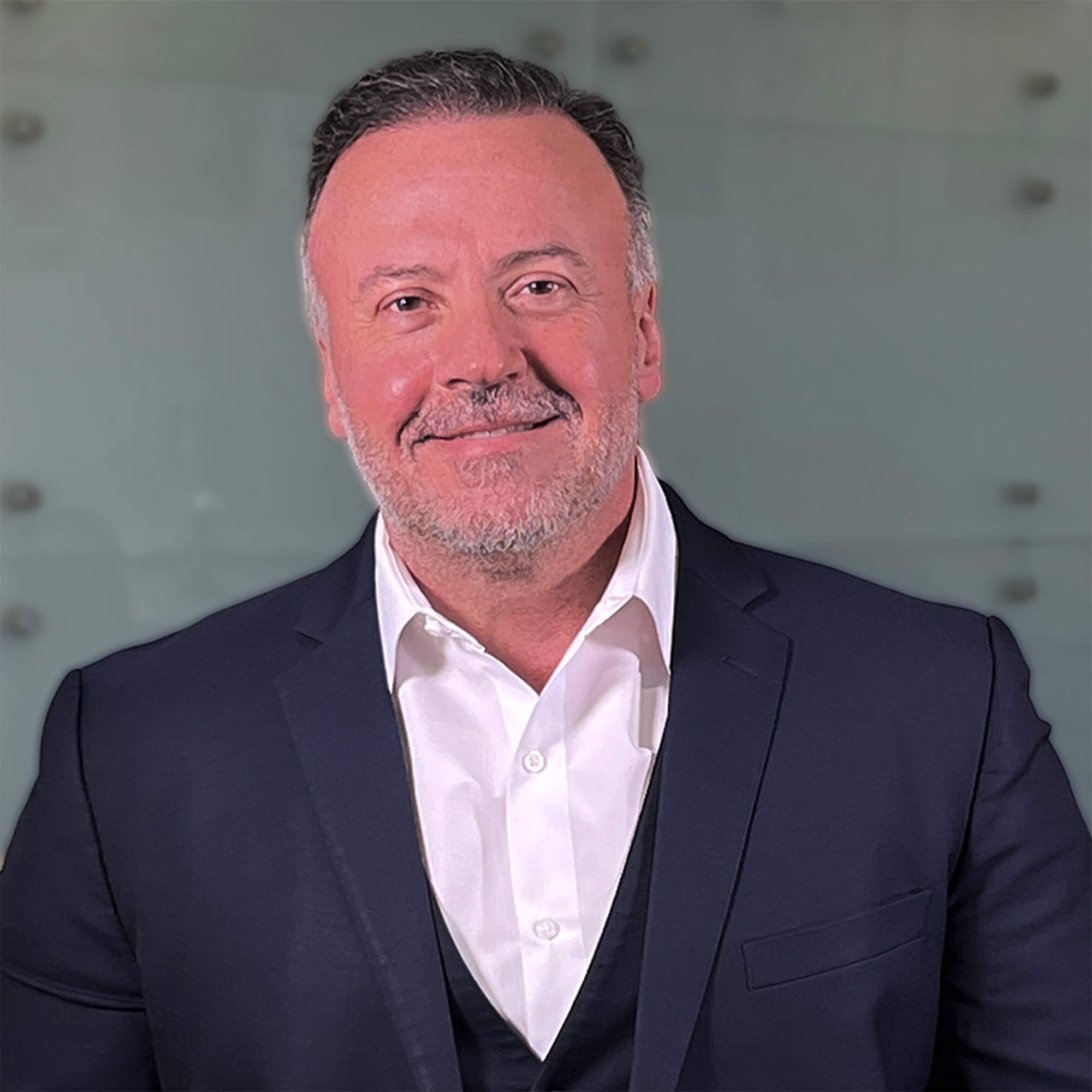
Written by
Cosmetic Surgeon, Board-Certified Urogynecologist
Fellow of the American Academy of Cosmetic Surgeons; Fellow of the American College of Obstetricians and Gynecologists. Medical Degree: University of Miami School of Medicine; Residency: Orlando Regional Healthcare System as Chief Resident.
Our board-certified team offers personalized, judgment-free consultations to help you decide what's right for you.
RECENT POST
BROWSE BY CATEGORY
VISIT US
527 Odd Fellows Road STE B
Crowley, LA 70526
(337) 514-4369
Mon – Thu 8:00 – 5:00
Friday 8:00 – 12:00
%20(SM).png)
(sm).png)
(SM).png)