Acadia Women's Health
October 26, 2026
min read

A tummy tuck without surgery is an advertising phrase, not a medical one. The treatments behind it are real, but the marketing blurs them together and rarely explains the part that matters. Surgery and non-surgical treatment are built to solve different problems, and knowing which problem you actually have is what decides whether either one can help you.
The treatments themselves are not a gimmick. The ISAPS Global Survey counted 1,239,306 non-surgical skin tightening procedures worldwide in 2024, up almost 39 percent in a single year.
Acadia Women's Health is a women's practice in Crowley, and we offer non-surgical treatments as well as surgery. That means we have no reason to steer you toward either one. This article covers what is actually causing the change you see, which treatments help, what they cannot do, and how to tell which side of that line you are on.
Before any treatment can help, you have to know which of three separate problems you are actually dealing with. Your abdomen can change shape because of extra fat, because the skin has stretched past the point of springing back, or because the muscle wall underneath has separated. They look similar in the mirror and behave completely differently under treatment.
Fat is the one most women assume they have. It feels soft and pinchable, and the skin over it still has some bounce when you let go. Loose skin behaves differently. It folds on itself, wrinkles near the belly button, and changes dramatically when you sit down or lean forward.
Muscle separation is the one almost nobody expects. During pregnancy the two vertical muscle columns down your midline drift apart, a bit like a zipper easing open, and the tissue between them thins and widens. That is diastasis recti, and it is why a stomach can still push forward when there is very little fat left to blame.
It is far more common than most women realize. Researchers followed 300 first-time mothers and published what they found in the British Journal of Sports Medicine.
At 6 weeks postpartum, 60 percent had diastasis recti. At 12 months, 32.6 percent still did.
If your belly still looks pregnant a year after your baby was born, you are in very ordinary company.
Pregnancy and major weight loss push these problems in different directions. Pregnancy tends to stretch skin and separate muscles. Losing a large amount of weight tends to leave skin behind that has lost some of its ability to shrink back, which is a physical change and not a discipline problem.
One thing is worth ruling out early. A hernia can also cause a bulge, and it needs a different kind of attention. Mayo Clinic describes a hernia as a bulge in one specific spot that gets more obvious when you stand, cough, lift, or strain.
Diastasis behaves differently. It usually shows up as a ridge or doming down the middle when you tighten your stomach. Pain, vomiting, or a tender bulge that will not push back in should be looked at promptly rather than treated cosmetically.
This is also why the most heavily advertised device is rarely the right starting point. The question is never which machine is best. It is which of the three problems you have, and how much of each.
Once you know what you are treating, the options sort themselves out quickly. Each of these technologies does one thing well, and almost nothing outside of it. Combining treatments does help in the right person. Reducing a fat layer and firming the skin over it can add up to a better shape than either one alone.
Treatment
What it targets
How it works
Truly non-invasive?
CoolSculpting®
Small, pinchable fat pockets
Controlled cooling that damages fat cells so the body clears them over weeks
Yes, nothing breaks the skin
ThermiSmooth® Body
Mild skin looseness
Gentle heat applied on the surface to stimulate collagen over a series of sessions
Yes
ThermiTight®
Mild to moderate skin looseness
Radiofrequency energy delivered under the skin through a small probe
No, a probe is placed under the skin
Electromagnetic muscle stimulation
Muscle tone and definition
Electromagnetic pulses that force strong muscle contractions
Yes
Cryolipolysis, better known as CoolSculpting®, cools a pocket of fat until those cells are damaged and your body gradually clears them. Cleveland Clinic reports an average fat reduction of 15 to 28 percent around four months after the first treatment. You may notice changes as early as three weeks, with clearer improvement after about two months.
That is a real result, and it is also a narrow one. It thins a layer. It does not tighten the skin above that layer, and it does nothing for the muscle wall underneath.
Radiofrequency treatments warm the deeper layers of skin so the tissue contracts and rebuilds collagen over the following weeks. There are two versions of this, and the difference matters more than the marketing suggests.
Surface radiofrequency is applied with a handpiece and nothing breaks the skin. Our ThermiSmooth® Body treatment works this way and is used on the abdomen among other areas, with no downtime afterward.
The stronger version places a small probe under the skin instead. ThermiTight® treats mild to moderate looseness on the stomach in about an hour under local anesthesia. That means you are awake but comfortable, and the area being treated is numbed.
Most women are back to normal activities within about 24 hours, though swelling and redness are common at first. Worth knowing: this one is minimally invasive rather than truly non-invasive, because a needle-thin probe does go under the skin.
Electromagnetic muscle stimulation forces the abdominal muscles to contract far harder than they can voluntarily. It can improve tone, and this is where honesty matters most. The FDA states that muscle stimulators may temporarily strengthen or firm muscle, but that zero such devices are cleared for weight loss or girth reduction.
You might be thinking, will anyone actually tell me when a treatment is not going to do what I want? That is a fair worry, and it is the reason we would rather examine you than sell you a package.
There is also an injection that dissolves small pockets of fat, a medicine called deoxycholic acid. Almost all the research behind it looked at one small area of the body, and the studies that got it approved treated 363 patients for fat under the chin, not the stomach. For a stomach it is not the right tool, and no amount of clever marketing changes the size of the area these injections can realistically treat.
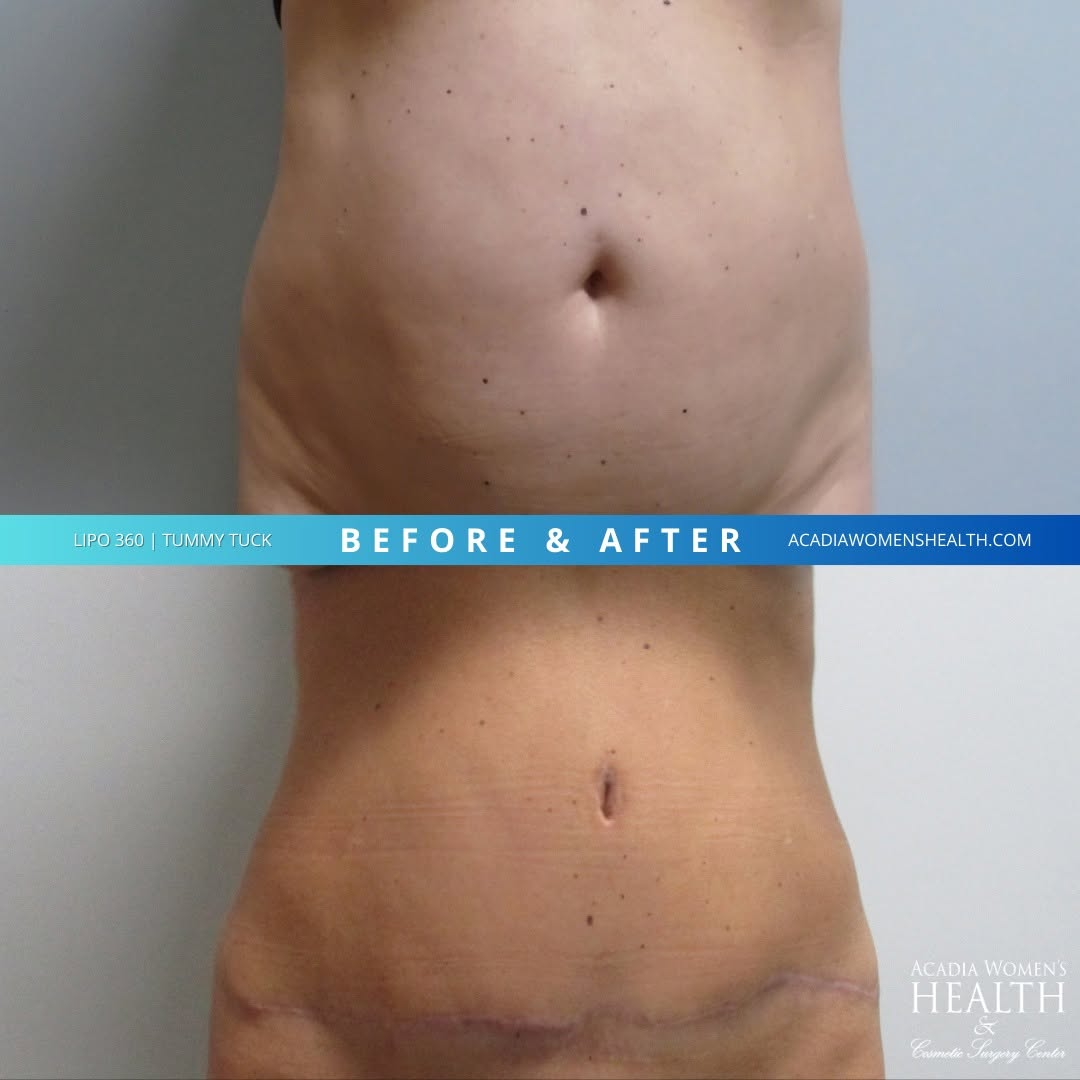
This is the section the advertising skips, so here it is plainly. Non-surgical treatments can modestly reduce a selected fat pocket and improve the look of mildly loose skin. They cannot remove an apron of excess skin, and they cannot repair separated muscle.
The American Society of Plastic Surgeons is direct about the fat side of it. Asked whether non-surgical fat reduction works, its own answer is that the picture is more complicated than the advertising suggests.
The muscle side is simpler. No energy-based device closes a separation in the abdominal wall, because heating tissue is not the same as bringing two muscle edges back together.
The reason is physical rather than a matter of finding a stronger setting. Energy-based devices heat and remodel tissue. Removing a fold of skin means cutting it away, and closing a separation means stitching the two muscle edges back together. Heat cannot do either of those things.
The measured numbers help set expectations honestly. In an eight-session radiofrequency study of 15 volunteers, the reported effect was around a 2 percent reduction in circumference and a 9 percent reduction in fat thickness. Those are genuine improvements. You will notice them most in how your clothes sit.
Severity is the deciding factor with skin. Mild looseness responds to tightening treatments reasonably well. A fold that hangs over your waistband, or a C-section shelf, is past what tightening can reach. That is exactly what a tummy tuck removes.
Muscle separation has a better middle path than most women are told. Physical therapy genuinely helps, even though it will not produce a surgical result. A 2025 systematic review of 34 randomized trials found that abdominal exercise narrowed the gap between the muscles by 6.82 millimeters compared with no intervention.
The studies behind that number were not especially strong ones, so treat it as encouraging rather than settled. Even so, it is meaningful for core strength and comfort, and it is a sensible first step in the first year after delivery, when many separations improve on their own.
So when a treatment is advertised as a non-surgical tummy tuck, the useful response is not skepticism about the technology. It is a simple question about which of your three problems it is actually treating.
Stacey came in for body contouring and valued being told what was realistic before anything was scheduled.
"Dr Owens did an amazing job on my bbl, lipo 360 and tummy tuck. I feel so much confidence in how my clothes fit and she listened to all my concerns and gave me realistic results of what she could do"
Non-surgical contouring runs on a slower clock than most women expect. Nothing happens on the drive home. Your body needs weeks to clear damaged fat cells and months to build new collagen, so the result you are paying for shows up gradually.
Option
Sessions typically needed
When change shows
Downtime
Fat freezing
1 to 2 cycles per area
3 weeks to 3 months
None
Surface radiofrequency
A series of sessions
Over several weeks
None
Radiofrequency under the skin
Usually one
Immediate, improving over months
About 24 hours
Tummy tuck
One operation
Weeks, settling over months
Several weeks
The most useful number for setting expectations comes from a 2025 review that pooled 30 studies and more than 3,100 people. On average, fat freezing took 3.56 centimeters off the waistline by 12 weeks, and about 80 percent of patients were happy with the result.
That is a real change in how a waistband fits. It is not the change a tummy tuck produces, and knowing that in advance is why women end up happy with what they get.
How long it lasts depends on your weight. Fat cells that are cleared do not come back, but the ones left behind can still enlarge, so a stable weight protects what you paid for.
Side effects are usually mild and temporary. Redness, numbness, swelling, and bruising are common after fat freezing and generally settle within a few weeks.
One uncommon effect is worth knowing by name. Paradoxical adipose hyperplasia is when treated fat enlarges instead of shrinking, months later. A 2023 review of 3,445 treatment cycles identified four cases, about 0.12 percent, and it is correctable.
Recovery is where the two paths really diverge, and for a mom juggling school pickup and everything else, it is often the deciding factor. Non-surgical treatment asks for little or nothing. A tummy tuck asks for real time, typically two to four weeks before returning to work and about six weeks before strenuous activity.
Cost is a fair question, and one we would rather answer properly than guess at over the phone. The total depends on which areas are treated, how many sessions your plan needs, and whether you repeat treatment to hold the result.
That is why consultations at Acadia Women's Health are free. It is also why we offer flexible financing through Cherry, Affirm, and CareCredit, along with layaway and a 4 percent cash discount. A real number for your actual plan beats a range that turns out to mean nothing.
The decision gets much easier when you stop shopping for a treatment and start with what your own body is actually doing. A few honest answers usually settle it.
Start with weight. Contouring shapes what is there rather than reducing what you weigh, so holding your weight steady is the thing that makes any of these options work. If your weight is still moving, waiting protects your result.
Then consider what your skin is doing. If fat is your main issue and your skin still snaps back, you are a strong candidate for a non-surgical treatment. You are also a candidate for liposuction if you want a bigger change in one step, and our Lipo 360 version treats the whole midsection.
If you have real skin excess or muscle separation, a mini or full tummy tuck is the option built for it. A mini addresses a smaller area of the lower abdomen through an incision about the size of a C-section scar. A full tummy tuck removes the skin between the navel and the pubic area and tightens the muscle wall above and below.
Timing deserves a thought too. If another pregnancy is likely, most women are better served by waiting before surgical muscle repair, since pregnancy can stretch a repair again. Waiting until your family is complete keeps the result from being undone.
A good evaluation looks at fat distribution, skin elasticity, muscle tone and separation, your medical history, and your goals. It should end with a recommendation you can explain to your partner in plain words, not a device name.
Our free consultations are a one-on-one visit with one of our providers, and they run in both directions. You are deciding whether you trust us as much as we are working out what will help you.
Dr. John Gonzalez, MD, FAACS, FACOG, and Dr. Michelle Owens, MD, FAACS, FACOG, built this practice in Crowley. Dr. Gonzalez is board certified by the American Board of Obstetrics and Gynecology, and Dr. Owens is a Fellow of the American College of Obstetricians and Gynecologists. Both are Fellows of the American Academy of Cosmetic Surgery, and between them they have cared for women in Acadiana for more than 25 years.
Asma came in for a consultation and was told her situation needed a procedure this practice does not perform.
"Dr Owens did a thorough exam on me and let me know that she recommended a more involved procedure that their surgeons didn't do (body lift). I was impressed by her honesty and professionalism, as she could have just told me I'll be fine with a tummy tuck to get my business. I consulted with another surgeon who agreed with her assessment."
The ads that sent you looking are not lying to you. The fairest answer is that they are telling you a piece of it. Non-surgical treatments do real work on fat and mild looseness, and a tummy tuck does work that no device can copy. Which one belongs to you depends entirely on what changed in your body.
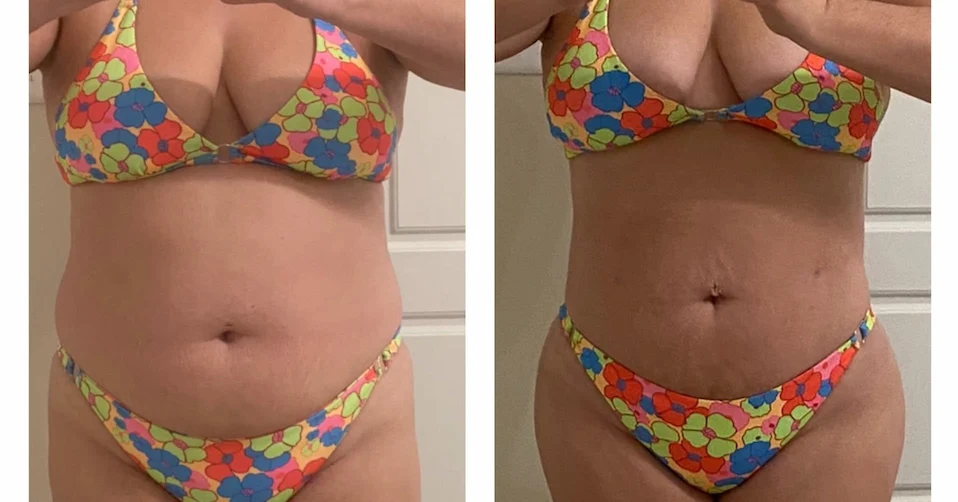
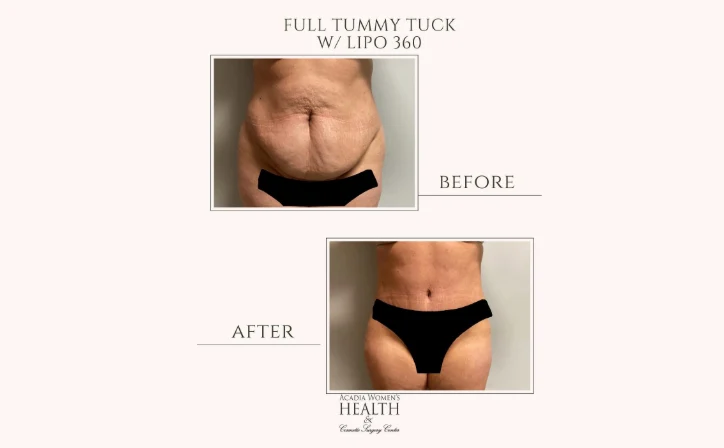
A good next step costs nothing. Looking through before and after photos of women with similar starting points tells you more than any product page will.
The team at Acadia Women's Health has spent more than 25 years helping women across Acadiana sort out this exact question. We understand the body you have and the body you want.
Whichever direction turns out to be right for you, you deserve to hear it plainly before you spend a dollar. When you want a straight answer about your own stomach, talk it through with us or call 337-514-4369.
Not in the literal sense. No non-surgical treatment removes excess skin or stitches separated abdominal muscles back together, which is what a tummy tuck does. What these treatments can do is reduce a small fat pocket and firm mildly loose skin, which is genuinely useful for the right person.
For a pinchable pocket of fat in someone near her goal weight, fat freezing has the strongest track record and the most predictable outcome. The important word is pocket. These treatments contour a specific area rather than reducing overall body fat, so they work best as a finishing tool.
No. Fat freezing targets fat cells and has no meaningful effect on the skin above them. If your skin is already loose, reducing the fat underneath can occasionally make the looseness slightly more noticeable, which is exactly why an exam matters before you book anything.
They are not designed for severe looseness. Radiofrequency and ultrasound treatments work by heating tissue so it contracts and rebuilds collagen, which produces modest tightening in mild to moderate cases. A hanging fold of skin needs to be removed rather than shrunk.
Electromagnetic muscle stimulation can improve muscle tone, but it does not close a separation in the abdominal wall. The tissue between the two muscle columns has stretched and thinned, and contracting the muscles harder does not draw that tissue back together. Surgical repair is what physically closes the gap.
Exercise helps more than most women are told. Targeted physical therapy measurably narrows the distance between the muscles and improves core strength and comfort. It is a sensible first step, especially in the first year after delivery, though a wide separation usually needs surgical repair to close fully.
No, and this is the clearest limit of the whole category. An apron of skin is extra tissue that has to be cut away. No device heats, freezes, or stimulates it out of existence, and any advertisement suggesting otherwise is overselling what the technology does.
It depends on the treatment. Fat freezing commonly takes one to two cycles per area, while surface skin tightening is usually delivered as a series of sessions. Treatments that place radiofrequency under the skin are often a single appointment. Your plan should be quoted as a full course, not a single session.
Fat cells that are cleared do not return, so a fat reduction result holds as long as your weight stays stable. Skin tightening is different, because skin continues to age and results soften over time, which is why maintenance sessions are often part of the plan.
Truly non-invasive treatments like fat freezing and surface radiofrequency have essentially no downtime, and most women go straight back to their day. Treatments using a probe under the skin usually mean about 24 hours before normal activity, with some swelling and redness at first.
They have a good safety record when performed by trained providers on suitable candidates. Temporary redness, swelling, numbness, and bruising are the usual effects, and uncommon complications do exist. As with anything medical, being properly assessed beforehand is the single biggest factor in a smooth experience.
When the change you want is bigger than a modest one. Liposuction suits firmer skin with more fat than a device can address. A mini tummy tuck suits a smaller area of loose lower belly skin. Telling those apart is the point of an exam, and at Acadia Women's Health that exam is free.
Disclaimer: This article is for general educational purposes only and is not medical advice. Reading it does not create a physician-patient relationship. Every patient is different, individual results vary, and no outcome is guaranteed. Talk with a qualified physician about your specific situation before making any treatment decision.
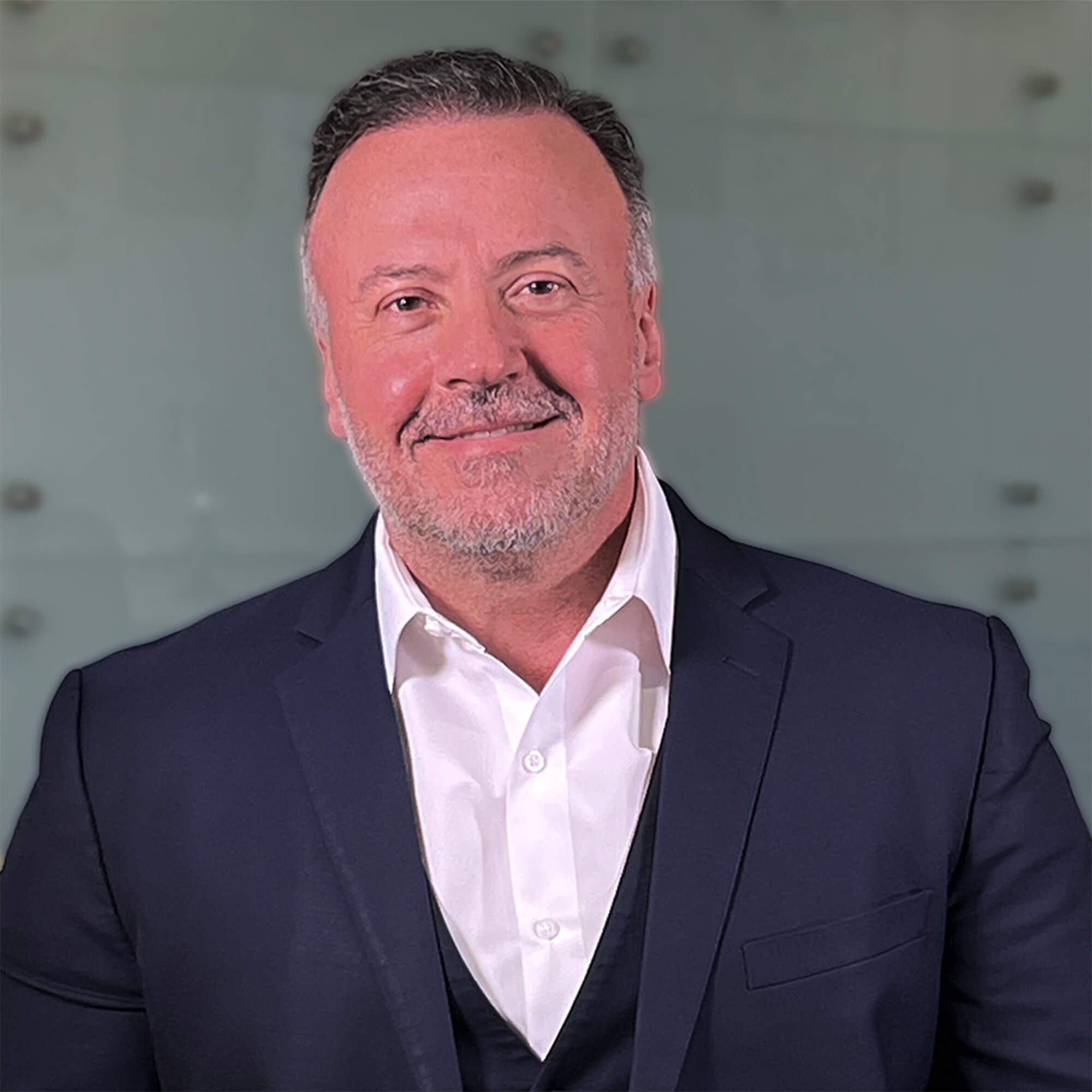
Written by
Cosmetic Surgeon, Board-Certified Urogynecologist
Fellow of the American Academy of Cosmetic Surgeons; Fellow of the American College of Obstetricians and Gynecologists. Medical Degree: University of Miami School of Medicine; Residency: Orlando Regional Healthcare System as Chief Resident.
Our board-certified team offers personalized, judgment-free consultations to help you decide what's right for you.
RECENT POST
BROWSE BY CATEGORY
VISIT US
527 Odd Fellows Road STE B
Crowley, LA 70526
(337) 514-4369
Mon – Thu 8:00 – 5:00
Friday 8:00 – 12:00