
Acadia Women's Health
September 29, 2026
min read

If diet and exercise have stopped changing your stomach, the reason is usually structural rather than a matter of effort. After pregnancy or a large weight loss, the skin and the muscle wall underneath can stretch past the point where they come back on their own. Closing that gap is what a tummy tuck, or abdominoplasty, is built to do.
It is also not only a cosmetic operation. In a study of 214 women reported by the American Society of Plastic Surgeons, more than half had moderate to severe back pain before surgery. About 4 in 10 were dealing with urinary leakage as well.
At Acadia Women's Health in Crowley, Louisiana, we sit down with women from across Acadiana about this exact decision. This guide covers what the surgery fixes, the options we offer, who it suits, what happens in the operating room, recovery, and the risks worth weighing.
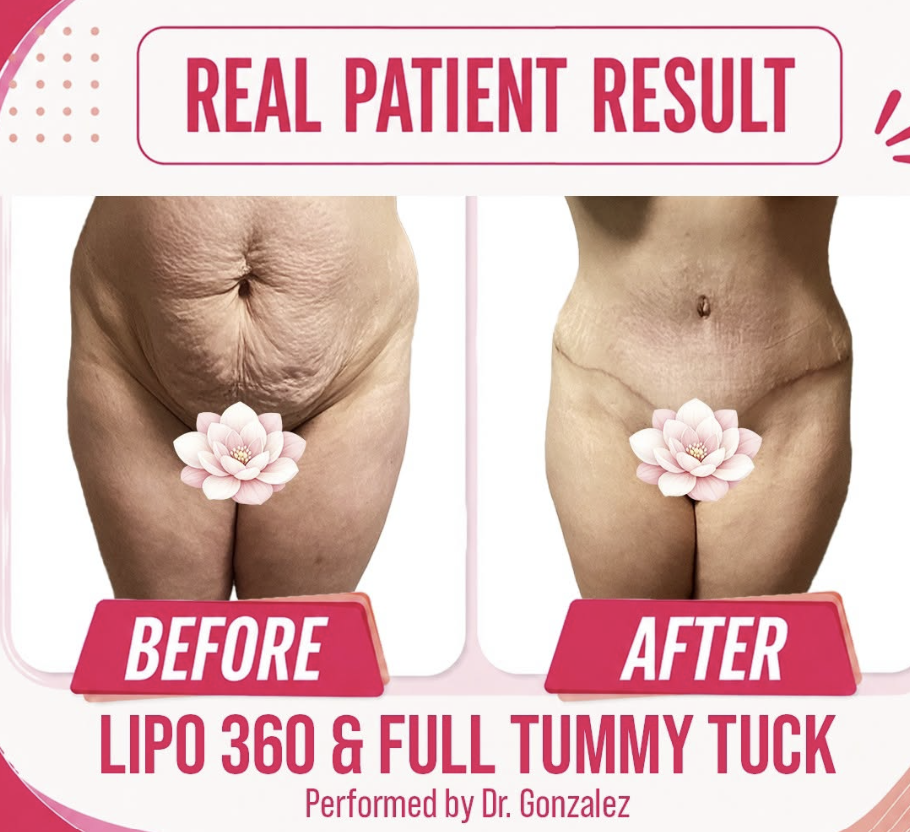
A tummy tuck removes the extra skin and some of the fat from your lower belly. It then tightens the connective tissue over your abdominal muscles, and the remaining skin is smoothed back down. The medical name is abdominoplasty. Both words describe the same operation.
The part most women have never had explained is the muscle wall. Pregnancy stretches the two vertical muscle columns down the middle of your belly apart, a bit like a zipper slowly coming undone. Doctors call this diastasis recti.
It is why the stomach can still push forward after every pound is gone. It is also why crunches can make it look worse instead of better. When researchers pooled 20 studies covering 1,691 patients, stitching those muscle borders back together was the most common way surgeons repaired the separation.
So the surgery addresses three things at once. There is skin that has lost its stretch, a layer of fat directly under that skin, and a muscle wall that has given way. That combination is what diet and exercise cannot reach, which is the honest reason so many fit, healthy women end up in a consultation room.
Here is where we would rather be straight with you, because knowing the limits up front is what makes women happy with their results later. A tummy tuck will not:
What it does deliver is a flatter, firmer, better supported midsection that clothes fit differently over. If you want to see that on real women rather than in a diagram, our tummy tuck before and after gallery is worth a slow scroll first.
There is no universally best version of this surgery. The right one matches your own anatomy, which is why two women can walk in with the same complaint and leave with two different plans.
We perform three. A mini tummy tuck handles a small amount of loose skin below the belly button, through the shortest incision of the three. A Brazilian tummy tuck pairs lower abdominal skin removal with liposuction, so the shape is refined as the excess comes out.
A traditional tummy tuck goes further. It takes the skin between the navel and the pubic area, hip to hip, and tightens both the upper and lower muscle wall.
Type
What it treats
Where the incision sits
Muscle repair
Mini tummy tuck
A small pooch and loose skin below the belly button only
A short line just above the pubic area, about the length of a C-section scar
Lower abdominal wall
Brazilian tummy tuck
Moderate loose skin in the lower abdomen plus localized fat, using liposuction to contour
Low across the lower abdomen
Depends on your anatomy
Traditional tummy tuck
Loose skin above and below the belly button, hip to hip, with muscle separation
Low across the abdomen from hip to hip, plus a small scar around the belly button
Upper and lower abdominal wall
Two details tend to surprise women. The first is the belly button. A mini tuck usually leaves it alone, while a traditional tuck brings it through a new opening in the repositioned skin, which is why that version carries a second small scar.
The second is that muscle repair is not automatic. It is done when the muscles have genuinely separated, not simply because the skin is loose. After a very large weight loss, some women need more than any of these three can reach, because loose skin can wrap around the flanks or run up the midline. Those more extensive versions exist, they involve longer scars, and they deserve an honest conversation rather than a quick yes.
Combining procedures is also common. Plenty of women have liposuction, breast work, or another area addressed during the same surgery, and roughly a quarter of tummy tuck patients do.
One surgery and one recovery is often the more practical path when more than one thing is bothering you. Whether it suits you depends on your health and how long the combined operation would take, so it is worth raising at your visit rather than assuming the answer either way.
The short version is this. You are likely a good candidate if your general health is solid, your weight has been steady, and you do not smoke. It helps if loose skin or separated muscles have been bothering you and have not responded to anything you have tried.
Steady weight matters more than the number on the scale. If you are still losing, that loss will create new loose skin after surgery has already removed the old. If you gain significantly later, the repaired skin and muscle stretch again. Waiting until your weight has held for several months is what protects the result you are paying for.
The same logic applies to pregnancy. Surgery is generally postponed if you are planning another baby, because pregnancy stretches exactly what the operation just tightened. This is not a rule about your family size, it is about sequencing. Plenty of women schedule this years later than they first imagined and are glad they waited.
A few things are worth flagging honestly at your visit, because they change the plan rather than end it:
None of that is automatically disqualifying. It is information your care team needs in order to plan safely, and holding it back helps no one.
Natalie came to us after losing more than 100 pounds, with the loose skin that weight loss leaves behind.
"I am thrilled to share my experience with Dr. G, who performed my tummy tuck and arm lift after I lost over 100 pounds. From our first meeting, his professionalism and genuine care put me at ease."
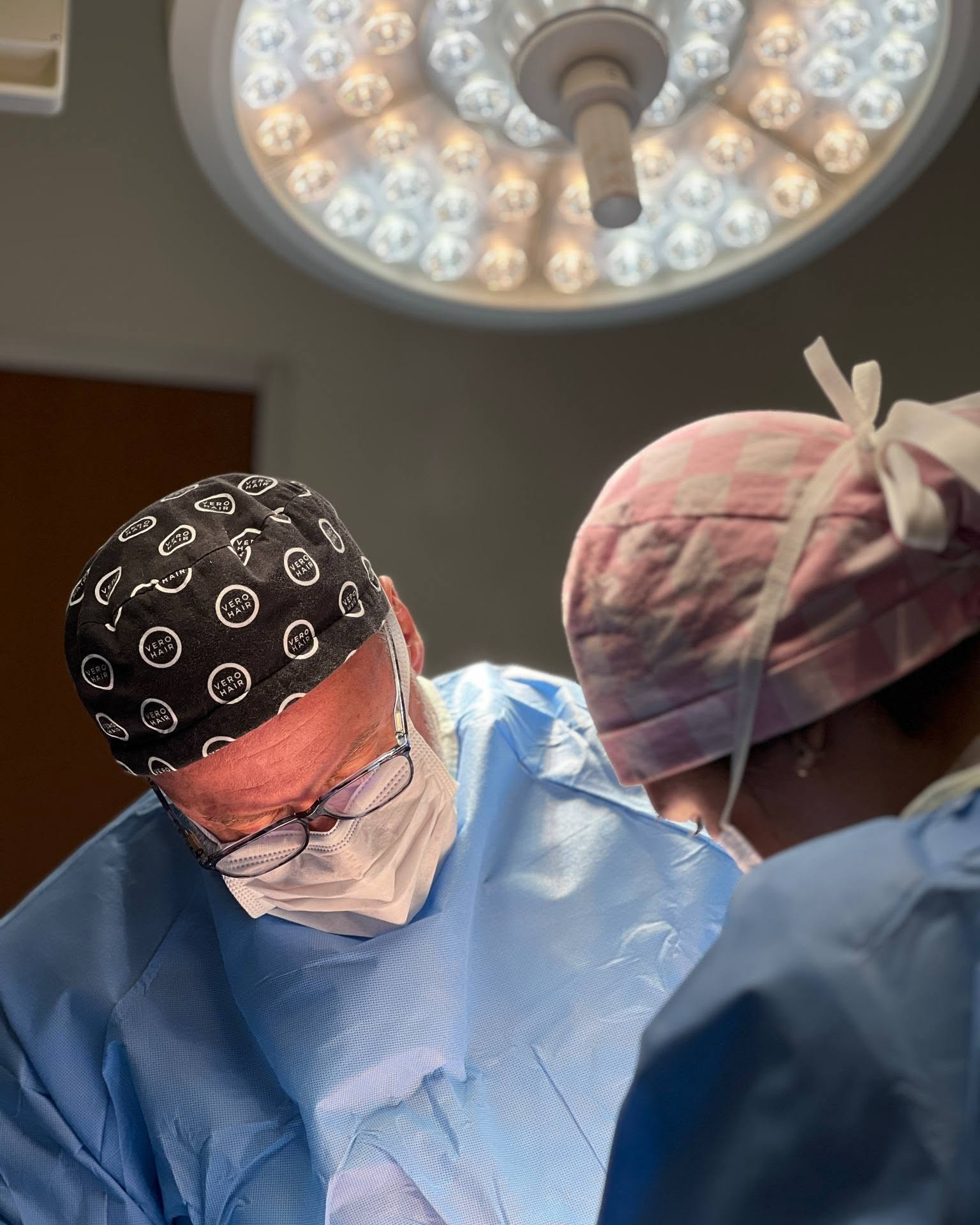
Knowing the order of events tends to take the fear out of it, so here is the operation from start to finish.
It begins with anesthesia. At Acadia Women's Health, we use anesthesia given by a certified registered nurse anesthetist for a tummy tuck, so you sleep through the surgery.
The incision comes next. For a traditional tummy tuck it runs low across the abdomen, roughly hip to hip, sitting in or near the pubic hairline where underwear and swimsuits cover it.
Your surgeon then lifts the abdominal skin, removes the excess, and reduces fat by taking it out directly or with liposuction. If the muscle wall has separated, this is the point where it is repaired. Stitches draw the connective tissue over the muscle columns back toward the midline, which rebuilds the support you feel when you stand up straight. Nothing is removed from the muscle itself.
The belly button is not taken away either, which is the question we hear most. It stays attached to its own blood supply while the skin around it is redraped and smoothed. A new opening is made in that repositioned skin, and the navel is brought through and stitched into place. That is why it often looks a little smaller and neater afterward.
Dressings go on at the end. Small drains are frequently placed along the incision to carry off fluid for the first several days, and a binder or compression garment supports the area while it settles. Surgery commonly takes about two to four hours. Most women go home the same day, though an overnight stay is sometimes the safer call when the procedure is extensive or combined with others.
Preparation starts at the consultation, which at our Crowley office is free and one on one with a provider. You will talk through your health history, previous abdominal surgeries, whether more children are in the picture, and what is realistically achievable for your body. Bring your questions written down. Nobody has ever asked us too many.
Bring your medicine list too, including vitamins and supplements. Aspirin, ibuprofen, naproxen, and several herbal products can increase bleeding, so they are usually paused before surgery. Prescribed blood thinners are different, and they are only ever adjusted by the doctor who prescribed them working with your surgeon.
Nicotine in every form, cigarettes and vapes alike, needs to stop for at least four weeks before and four weeks after. It starves the healing incision of blood flow, and this is one of the few risks you can lower entirely on your own.
The practical arranging is what women tell us they wish they had done sooner. Line up a driver and an adult to stay with you the first night, and ideally the first few days. Sort out childcare, easy meals, and someone to do the lifting.
Set up a spot where you can rest reclined with your hips and knees bent. Keep your medicines, water, and your garment within arm's reach.
Between visits, the patient portal is there for messaging the team, managing your appointments, and pulling up your records and forms.
Time after surgery
What most women are doing
First few days
Resting reclined with hips and knees bent, taking short walks several times a day, leaning on help at home
Week 1 to 2
Standing straighter, off prescription pain medicine for most, many back to desk work near the two week mark
Week 2 to 4
Driving again once narcotic pain medicine is behind you and braking is comfortable, light activity, still no lifting
Week 4 to 6
Lifting and strenuous activity cleared gradually, most exercise resuming around week six
Month 3 to 6
Swelling continuing to settle and the final shape showing itself, scar still changing
Expect the first week to feel like the hardest one, and expect it to pass. You will be sore, swollen, bruised, and walking a little bent forward at first, which is normal and temporary. Your instructions for the weeks ahead come home with you on paper, in the packet you get before surgery, so you are never guessing.
Those short, frequent walks are not busywork. They are how you keep your circulation moving while you heal. If you have drains, you will empty and record them exactly as instructed until the output drops enough to remove them.
Cost is part of preparing, and we would rather talk about it plainly than let it sit in the back of your mind. Every plan is priced individually, which is why we go through the numbers at your free consultation instead of guessing over the phone. We also offer flexible financing through Cherry, Affirm, and CareCredit, plus layaway and a 4 percent cash discount.
This is real surgery, and you deserve the honest version. Most of what happens is mild and expected. A pocket of fluid can collect under the skin, which the body reabsorbs or we draw off in the office.
Bruising, slow healing at one spot on the incision, temporary numbness, and small differences from one side to the other all happen. Less common but more serious ones include infection and blood clots. That is exactly why walking early and following the clot-prevention instructions matters so much.
Numbness deserves its own mention, because it surprises women who were not warned. The skin below your belly button will feel different for a while as the small nerves settle, and most of that returns over the first year.
In one study that followed patients for nearly four years, roughly two thirds still noticed some change in sensation below the navel. It usually reads as an area that feels a little muted rather than anything painful.
The scar is the honest trade, and it is permanent. It sits low, hidden by underwear and most swimsuits, and it looks its worst in the first couple of months before it flattens and lightens over roughly a year. A traditional tuck adds a small scar around the belly button. We talk through scar care with you before surgery and check in as you heal.
Call us right away, rather than waiting for your next visit, if you notice:
Over the long run, women tend to be glad they did it. In an ASPS-reported follow-up of patients who were overweight or obese, 94 percent were satisfied with their results and 97 percent said they would choose the procedure again.
Removed skin does not grow back and repaired muscle stays repaired, so the change is built to last. Biology keeps going, though, so a future pregnancy or a large weight swing can stretch things again.
Choosing who does the surgery is the part most within your control. Ask how often they perform this specific operation, and confirm that the surgical facility is accredited.
Our practice was built by Dr. John Gonzalez and Dr. Michelle Owens, who have cared for women in Crowley since 1999. Both are Fellows of the American Academy of Cosmetic Surgery and Fellows of the American College of Obstetricians and Gynecologists.
Dr. Gonzalez is also board certified through the American Board of Obstetrics and Gynecology, which is an ABMS member board. He has more than 25 years of experience in Female Pelvic Medicine and Reconstructive Surgery.
Cosmetic procedures are done in our own accredited in-office surgical suites, where more than 5,000 cosmetic surgeries have been performed.
Stacey wanted straight answers about what was possible for her body, which is the conversation we would rather have before surgery than after.
"Dr Owens did an amazing job on my bbl, lipo 360 and tummy tuck. I feel so much confidence in how my clothes fit and she listened to all my concerns and gave me realistic results of what she could do and I couldn't be anymore happier."
The effort was real, even when the mirror refused to agree. A tummy tuck is not a shortcut around that work. It is the repair for the part that was never going to respond, because loose skin and separated muscle are structural problems, and structure needs a structural fix.
You do not have to be certain about anything to take the next step. Look through real before and after photos first. Then, when you want to know what is realistic for your own body, reach out to our team or call us at 337-785-2006. The consultation is free, there is no pressure to decide that day, and you will leave with clear answers either way.
Researching this carefully before a decision this personal is exactly the right instinct. At Acadia Women's Health, we understand the body you have and the body you want. Whenever you are ready to talk it through, we are here.
A tummy tuck is surgery that removes loose skin and some fat from the lower abdomen. It also tightens the connective tissue over the abdominal muscles and smooths the remaining skin back into place. Abdominoplasty is simply the medical name for the same operation.
No, and the difference matters when you are choosing. Liposuction removes pockets of fat but does nothing about skin that has lost its elasticity or muscles that have separated. A tummy tuck removes the skin and repairs the muscle wall. Liposuction is often added alongside it to refine the shape rather than used in its place.
Some of them, and only the ones on skin that is being removed. Stretch marks sitting on the lower abdomen below the belly button usually go out with the excess skin. Marks above the navel or on the hips stay where they are, so this is worth looking at together before you build expectations around it.
Often, yes. When pregnancy or weight change has pulled the two muscle columns down your midline apart, stitches bring the connective tissue over them back toward the center. That repair is what flattens a bulge no amount of core exercise has touched. It also tends to make you feel more supported when you stand.
Very little, and that is the wrong reason to have one. The tissue removed usually weighs a few pounds, and this is a shaping operation rather than a weight-loss one. Women already at a weight they can hold get the best results, which is why steady weight comes before surgery rather than after it.
Yes, and pregnancy is one of the most common reasons women consider it in the first place. The usual guidance is to wait until your body has settled after delivery and breastfeeding, and until your weight has been stable for several months. If you are hoping for another baby, waiting until your family is complete protects the muscle repair.
Usually about two to four hours. It depends on how much skin is being removed, whether the muscle wall needs repair, and whether anything else is done at the same time. Add time in the recovery room before you go home. Most women have the whole surgery day wrapped up well before evening.
Often, though not always. Small tubes are commonly placed along the incision to carry off fluid that collects in the first days, and they usually come out within about a week. They look more alarming than they feel, and your team walks you through emptying and recording them before you go home.
Many women with desk jobs are back near the two week mark, while physically demanding work generally needs three to four weeks or more. The bigger limit is lifting, not sitting, and that restriction usually holds for about four to six weeks. Plan your leave around the lifting.
The structural change is lasting. Skin that has been removed does not come back and repaired muscle stays repaired, so the improvement is designed to hold for years. What can change it is a future pregnancy or a large weight swing, along with the ordinary loosening that comes with age.
Yes, pregnancy after a tummy tuck is possible and women do it safely. The consideration is cosmetic rather than a barrier to conceiving, because pregnancy stretches the same skin and muscle the surgery tightened. For that reason surgeons generally suggest finishing your family first if you have the option.
It is a low horizontal line across the lower abdomen, placed to sit under underwear and most swimsuits. A traditional tuck adds a small scar around the belly button. It looks raised and pink early on, then flattens and fades over roughly a year. Ask to see healed scars at a similar stage during your free consultation.
Disclaimer: This article is for general educational purposes only and is not medical advice. Reading it does not create a physician-patient relationship. Every patient is different, individual results vary, and no outcome is guaranteed. Talk with a qualified physician about your specific situation before making any treatment decision.

Written by
Cosmetic Surgeon, Board-Certified Urogynecologist
Fellow of the American Academy of Cosmetic Surgeons; Fellow of the American College of Obstetricians and Gynecologists. Medical Degree: University of Miami School of Medicine; Residency: Orlando Regional Healthcare System as Chief Resident.
Our board-certified team offers personalized, judgment-free consultations to help you decide what's right for you.
RECENT POST
BROWSE BY CATEGORY
VISIT US
527 Odd Fellows Road STE B
Crowley, LA 70526
(337) 514-4369
Mon – Thu 8:00 – 5:00
Friday 8:00 – 12:00
%20(SM).png)
(sm).png)
(SM).png)