Acadia Women's Health
October 7, 2026
min read

Losing a large amount of weight does not always give you the shape the number on the scale suggests. Skin that was stretched over more of you for years does not reliably shrink back once the weight is gone. The gap between the result you worked for and the one in the mirror is rarely mentioned in advance. A tummy tuck is the operation built to remove what is left behind.
It changes more than the outline. In a survey of 36 patients reported by the American Society of Plastic Surgeons, 97 percent said skin removal surgery improved their quality of life.
We are Acadia Women's Health, a women's practice in Crowley, Louisiana, and we sit down with women across Acadiana who want the last piece finished. This article covers why loose skin stays, whether surgery suits you, how the options differ, and what recovery asks of you.
Loose skin sticks around because skin and fat shrink on different schedules. When you lose a large amount of weight, the fat underneath goes first. The skin that was stretched over it has to try to catch up.
Sometimes it cannot. Skin holds its shape through collagen and elastin, the fibers that give it strength and spring. A 2024 study of skin after major weight loss measured significantly lower elastic fiber content in the abdominal skin of patients who lost the weight through bariatric surgery.
How much rebound you get depends on things you did not choose. Age, genetics, how quickly the weight came off, how long the skin was stretched, pregnancy history, and sun exposure all play a part. Mild looseness often does improve over several months as tissue settles.
A large, hanging fold usually does not. That is worth saying plainly, because women spend a lot of time and money on creams and machines hoping otherwise. Creams moisturize and protect the skin in a fold, and skin-tightening machines are meant for things like fine wrinkles, not for removing an apron of skin.
Exercise deserves the same honesty. Building your core improves posture and tone underneath, and losing more weight can shrink leftover fat. Neither one takes away skin that is already loose. You did not fail at anything.
Before you can pick a procedure, it helps to know what you are actually dealing with. Most women after weight loss have some mix of all three.
What you notice
What it usually means
What tends to help
A soft, thick fold you can pinch that gets bigger or smaller as your weight shifts
Leftover fat under the skin
Fat removal, on its own or alongside a skin excision
Thin, wrinkled skin that feels empty and hangs down on its own
True excess skin
Surgical removal of the skin
A ridge or doming down the middle of your belly when you sit up or cough
The two vertical muscles have separated, called diastasis recti
Stitching the muscle wall back together during surgery
There is one more thing worth knowing. A fold that traps moisture against skin can cause real medical problems, not just cosmetic ones. In a study of 75 people who had body contouring after weight loss, 70 percent had chronic skin problems in the lower abdominal fold.
If you have been quietly dealing with a rash under that fold every summer, you are not being vain for wanting it gone. That is your body telling you something practical.
The short answer is that you are likely a candidate when your weight has settled and your health is in good shape. What you want removed should be skin rather than pounds. Surgery reshapes what is left after weight loss, and it is not another way to lose weight.
Steady weight is the piece that matters most. The American Society of Plastic Surgeons generally advises being at or near your goal weight for about six months first. A 2024 study of 500 patients after weight loss used that same six-month mark. Giving it the time is what makes your result hold.
There is no single deadline that fits everyone, though. If you are still losing steadily, waiting protects the work. If the scale has been quiet for months and your habits feel sustainable, you are probably ready to have the conversation.
Your overall health gets a careful look too. Blood sugar control, iron and protein levels, blood pressure, any medications you take, and past abdominal surgeries all shape the plan. This matters more after bariatric surgery or rapid weight loss, because nutrition can quietly fall behind.
Smoking is the one factor with the clearest numbers attached. Nicotine narrows blood vessels and starves healing tissue of oxygen.
In a 132-patient study, wound healing problems showed up in 47.9 percent of smokers compared with 14.8 percent of nonsmokers. That is why most surgeons ask for complete abstinence for at least four weeks before and after.
Family planning belongs in this conversation as well. A future pregnancy can stretch repaired muscles and skin again, so many women choose to finish having children first. Neither choice is wrong, and it is your timeline to set.
The right operation follows your body, not a menu. What decides it is where your loose skin sits, how much of it there is, and whether the muscle wall underneath separated along the way.
If the excess sits low, your upper abdomen still feels reasonably firm, and there is little muscle separation, a mini tummy tuck may be all you need. It removes a smaller amount of skin and fat and tightens the lower abdominal wall. The incision runs about the length of a c-section scar, just above the pubic area.
Because less tissue is moved, recovery is generally quicker and the scar is shorter. What a mini cannot do is fix looseness above the belly button. It is a poor fit for skin that runs the full height of the abdomen.
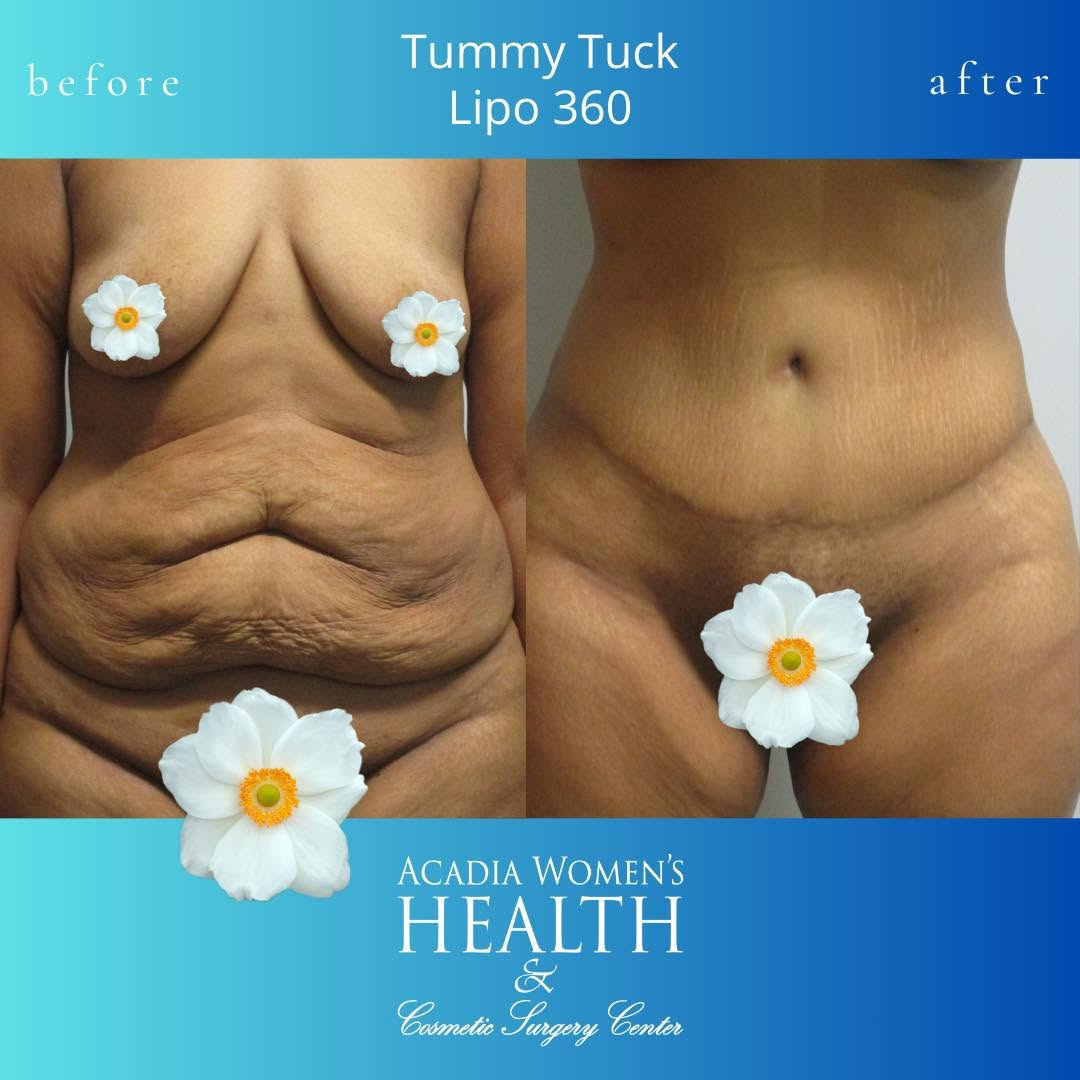
This is the more common picture after a large weight loss. A traditional tummy tuck, sometimes called a full abdominoplasty, removes the skin between the navel and the pubic area from hip to hip. It tightens both the upper and lower abdominal wall.
The incision is longer, and the belly button comes through a new opening in its natural position. What you get in return is a result across the whole abdomen, with the muscle repair included, which the smaller operations cannot do.
There is a middle path too. A Brazilian tummy tuck pairs liposuction with removal of excess skin from the lower abdomen. It suits moderate looseness that comes with pockets of stubborn fat.
Weight loss rarely stops at the front. If the looseness continues around your flanks, lower back, or thighs, an abdominal procedure alone will improve the front and leave the sides behind. That is not a failure of the surgery, it is a question of scope.
Sometimes the honest answer is a staged plan, addressing one area and then another once you have healed. Loose skin on the arms is common after major weight loss too, and an arm lift is often part of the same conversation.
It helps to be clear about what each tool actually does. Liposuction removes fat, not skin, so skin that has lost its spring can still hang once the fat underneath is gone. A panniculectomy removes a hanging apron of skin but does not tighten the abdominal wall or repair separated muscles the way a tummy tuck does.
Natalie came to us after losing more than 100 pounds and needed two areas addressed, not one.
"I am thrilled to share my experience with Dr. G, who performed my tummy tuck and arm lift after I lost over 100 pounds. From our first meeting, his professionalism and genuine care put me at ease. I can wear clothes I never imagined I could again. The recovery process was smooth, and Dr. G's follow-up care was exceptional. I highly recommend him to anyone considering body contouring procedures."
Having cosmetic surgery, gynecology, and med spa care in one building at Acadia Women's Health means nobody has to send you elsewhere to finish the job. The plan gets built around your body rather than around a single service.
Cost tends to be the next question, and it moves with the scope of the work. How much skin comes off, whether muscle repair or fat removal is added, and how long you are in the operating room all change the number. That is why an honest quote comes from an exam rather than a web page.
Planning starts with a conversation and an exam, not a surgery date. Your free consultation is a one-on-one visit with one of our providers. It covers your weight history, your goals, your medical and surgical background, medications, nicotine use, and what your skin and muscle wall are actually doing.
Past abdominal surgery gets particular attention. Old scars can change the blood supply to the skin, and bariatric surgery raises questions about iron, protein, and vitamin levels. Those are worth correcting before an operation rather than after.
Our practice was built by Dr. John Gonzalez and Dr. Michelle Owens, who have cared for South Louisiana women since 1999. Dr. Gonzalez is board certified through the American Board of Obstetrics and Gynecology and is a Fellow of the American Academy of Cosmetic Surgery, with more than 25 years of surgical experience.
On surgery day, a full tummy tuck is done under general anesthesia, so you are asleep and feel nothing. A low incision is placed near the pubic hairline, running hip to hip. The skin is lifted, the planned skin and a tailored amount of fat are removed, and the belly button is brought through a new opening.
If your abdominal muscles are separated, they are stitched back together at this stage. Drains are sometimes used and sometimes not, depending on the technique. Most women go home in a compression binder with instructions to start short walks right away.
Beforehand there is homework. Labs and any medication changes get sorted, nicotine stops well in advance, and you arrange a ride home plus a responsible adult for the first night. You can message the team or check your forms through the patient portal while you get organized.
Money should not be the thing that keeps you guessing either. We offer flexible financing options through Cherry, Affirm, and CareCredit, along with layaway and a cash discount.
The first two weeks ask the most of you. Expect soreness, tightness, bruising, and a bent-forward posture that takes tension off the repair, along with real limits on standing and lifting. Short, frequent walks are encouraged from day one, and having help at home makes a bigger difference than almost anything else.
Things loosen up from there. Many women manage desk work somewhere between one and three weeks, and driving usually returns after roughly one to two weeks once prescription pain medicine is behind you. Strenuous exercise waits about six weeks, with your surgeon's clearance.
Swelling is the slow one. It can take up to about three months to substantially settle, and the final shape keeps refining after that. Numbness across the lower abdomen and a pulling sensation are normal for weeks to months, and sensation keeps improving well past the first year.
Risks are real, and you deserve to hear them from us rather than a message board at midnight. A literature review found local issues in roughly 10 to 20 percent of tummy tuck patients. The usual ones are a small pocket of fluid the body reabsorbs, minor bruising under the skin, or an area of slow healing. Serious problems such as blood clots are much less common.
Your own health moves those odds more than anything the surgeon does. Nicotine, blood sugar, weight, and nutrition each shift your risk, which is why the preparation above is not busywork. It is the part you control.
Scars are permanent and sit low, where underwear and swimwear generally cover them. They stay firm and pink for months before fading and flattening over the first year or two. We talk through scar care before surgery and check in with you as you heal.
Results hold well when your weight stays steady. A future pregnancy, significant weight gain, or simple aging can change the contour over time, but the skin that was removed does not come back.
In the research, quality of life after body contouring improves and tends to stay improved. A systematic review pooled the studies and found physical functioning improved by 28.5 percent, with significant gains in social functioning and psychological wellbeing too.
Being able to reach your surgeon directly matters most in exactly these weeks. Cosmetic surgery patients at Acadia Women's Health often leave with their surgeon's personal cell number. Surgery happens in our own accredited suites, in the same building where you had your consultation.
Heather wrote about her recovery at our Crowley office four weeks after surgery.
"I am four weeks postop from a tummy tuck and muscle repair with Dr. Gonzalez and it has gone above and beyond anything I could have ever imagined. The recovery has been amazing and honestly so easy. I feel so great, and I don't even think I was mentally prepared for what I would look like, because I could not imagine it. My scar is pretty perfect, if scars can be beautiful it is and it healed so quickly. My mommy pouch is gone and so is all of my back pain I was carrying around from everything that was hanging off of the front of me. I could not have asked for a more caring doctor and staff. I think their years of women's health makes them even better at this kind of cosmetic work. You're not just another surgery number. They know you, they remember you."
You lost the weight. That was the hardest part, and a tummy tuck is simply the tool that finishes what your body could not finish on its own. Wanting the mirror to finally agree with the scale is reason enough.
A good next step costs nothing. Looking through real before and after photos in our tummy tuck gallery tells you more about what is realistic for a body like yours than any article can.
When you are ready, you can reach out to our team with no pressure to pick a date that day. There is no wrong time to simply ask your questions.
We are Acadia Women's Health, and we understand the body you have and the body you want. Whenever the timing feels right, we are here. Our number is 337-785-2006.
Mild looseness often improves over several months as your tissue settles. A large fold that hangs on its own usually will not, because the elastic fibers in stretched skin do not fully recover. If you can lift the skin and it feels thin and empty rather than thick and pinchable, it is unlikely to tighten further.
There is no universal number, because it depends on your starting point and your goal. What matters is being at or near the weight you intend to maintain, rather than hitting a specific total. If you expect to lose a good deal more, waiting protects your result.
Most surgeons look for about six months of steady weight. That window shows your habits are sustainable, which is what keeps the contour looking the way it did on day one. Your provider will look at your actual trend rather than a single weigh-in.
No. A tummy tuck removes skin and a tailored amount of fat and can repair separated muscles, but it is a shaping operation, not a weight-loss one. Women who have it are usually near their goal weight already and want the loose skin addressed.
A panniculectomy removes the hanging apron of skin and fat and stops there. A tummy tuck removes excess skin, contours the remaining tissue, repositions the belly button, and can stitch separated abdominal muscles back together. The tummy tuck does more of the shaping work.
It is usually better to wait until the scale settles. Continuing to lose weight after surgery can leave new looseness in skin that was just tightened. If you are close to the end of your weight loss, a consultation can help you plan the timing rather than guess at it.
The main drivers are how much tissue is removed, whether muscle repair or liposuction is added, and how long you are in the operating room. Anesthesia, the facility, labs, medications, and your compression garment factor in as well. These are out-of-pocket cosmetic procedures, so we offer financing through Cherry, Affirm, and CareCredit along with layaway.
The first two weeks are the most demanding, and most women feel meaningfully better by week three or four. Strenuous activity generally waits about six weeks, and swelling can take around three months to settle. The final shape continues to refine after that.
Desk work is often manageable somewhere between one and three weeks, depending on how you feel and how much sitting is involved. Heavier, more physical work usually needs closer to a month. Lifting anything substantial, including a toddler or a laundry basket, waits for your surgeon's clearance.
A full tummy tuck leaves a low horizontal scar running hip to hip, plus a small scar around the belly button. A mini leaves a shorter line, roughly the length of a c-section scar. Scars are permanent, but they are placed low so underwear and swimwear generally cover them, and they fade and flatten over the first year or two.
The skin that was removed is gone for good. Significant weight gain, a pregnancy, or aging can stretch the remaining skin and soften the contour over time. Keeping your weight steady is what protects the result long term.
That is common after a large weight loss, and it means an abdominal procedure alone will improve the front and leave the sides. A staged plan, treating one area and then another after you have healed, is often the safer and more complete route. Our free consultation is the right place to map that out, because it depends entirely on how your skin is distributed.
Disclaimer: This article is for general educational purposes only and is not medical advice. Reading it does not create a physician-patient relationship. Every patient is different, individual results vary, and no outcome is guaranteed. Talk with a qualified physician about your specific situation before making any treatment decision.

Written by
Cosmetic Surgeon, Board-Certified Urogynecologist
Fellow of the American Academy of Cosmetic Surgeons; Fellow of the American College of Obstetricians and Gynecologists. Medical Degree: University of Miami School of Medicine; Residency: Orlando Regional Healthcare System as Chief Resident.
Our board-certified team offers personalized, judgment-free consultations to help you decide what's right for you.
RECENT POST
BROWSE BY CATEGORY
VISIT US
527 Odd Fellows Road STE B
Crowley, LA 70526
(337) 514-4369
Mon – Thu 8:00 – 5:00
Friday 8:00 – 12:00
%20(SM).png)
(sm).png)
(SM).png)