Acadia Women's Health
September 22, 2026
min read
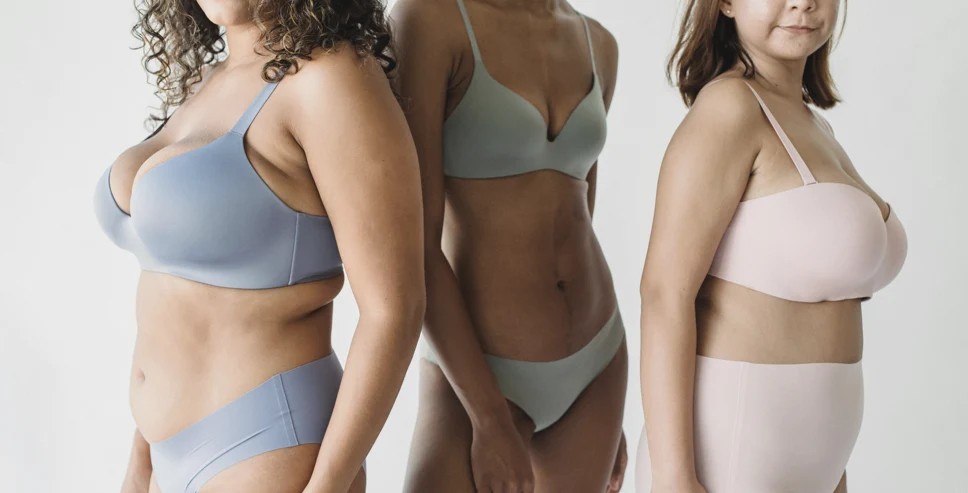
Most women thinking about breast augmentation describe the size they want in cup sizes. The trouble is that cup size is not a reliable measure: a C in one bra brand is not a C in another, and surgeons do not order implants by the letter.
Instead, surgeons plan by volume, measured in cubic centimeters (cc), which is a fixed amount that does not vary by brand. The American Society of Plastic Surgeons notes that implants are sized in cc, not cup size, because no uniform standard ties a bra letter to a fixed volume.
At Acadia Women's Health in Crowley, Louisiana, we help women across Acadiana choose a size that fits their frame and their goals, not a number off a chart. This guide walks through why cup size falls short, how cc and profile shape your result, the measurements that guide the choice, and how to decide between a natural look and a fuller one.
Cup size is a moving target, and that is the honest reason surgeons do not build a plan around it. A bra letter describes how a bra fits, not a fixed amount of breast tissue, so it drifts from brand to brand and even between styles in the same drawer.
The gap is bigger than most women expect. In a 2024 study of bras from seven manufacturers published in Aesthetic Surgery Journal, cup volume differed significantly between brands at every size, and the spread grew as the cups got larger. The variation between brands measured about 31 cc at an A cup and jumped to more than 120 cc at a DD. That is a full implant's worth of difference hiding behind one letter.
Volume, on the other hand, holds still. Implants are measured in cc, a direct measure of space, so 300 cc is 300 cc no matter whose bra you try on. That is why your surgeon speaks in cc and uses photos and sizers, rather than asking you to name a cup.
There is one more wrinkle, and it is worth knowing before you fall in love with a number. The same cc can look different on different bodies, because your chest width, your skin, and how much natural tissue you start with all change how an implant fills out. Feeling a little lost in the letters and numbers is completely normal, and it is exactly what the sizing process is designed to sort out.
Most women want a rough translation, so here it is: expect around one cup size for every 130 to 150 cc, then adjust from there. A 2017 study used three-dimensional scans to test this. It found that about 130 cc matched one cup size on narrower frames and about 150 cc on wider ones. That is why there is no single magic number.
Surgeons often start counseling from ranges like these, then refine them against your body:
Current cup to desired cup
Approximate implant volume
A to B
150 to 200 cc
A to C
300 to 350 cc
A to D
370 to 450 cc
B to C
150 to 200 cc
B to D
300 to 350 cc
C to D
150 to 200 cc
C to DD
200 to 300 cc
Read these as a starting point, not a promise. Your band size shifts the math, since a wider chest usually needs a little more volume to move the same number of cups. How much natural tissue you already have matters too, because more of your own tissue can carry part of the look while less tissue lets the implant do more of the work.
This is also where a real conversation beats a chart. At Acadia Women's Health, we offer saline and silicone implants across a wide range, from 100 to 1000 cc, and the most common, natural looking sizes tend to land between 300 and 500 cc. How does the implant profile change how the same cc looks on my chest?
Profile is the piece most women have never heard of, and it explains why two implants with the same cc can look nothing alike. Profile describes how far an implant projects forward from your chest wall, which depends on how that volume is spread across the implant's base.
Think of it like this. Pour the same amount of water into a wide, shallow bowl and a narrow, tall glass, and it sits very differently. A narrower base pushes the volume forward for more projection, while a wider base spreads it across the chest for a flatter, softer slope.
Surgeons group these shapes into profiles: low, moderate, moderate plus, high, and ultra-high. Low profile is the flattest and widest, the higher profiles get narrower and project more, and moderate options sit comfortably in the middle. Which one flatters you depends on your chest, not on a ranking. Low to moderate profiles usually suit wider chests, while a narrower chest often looks balanced with a higher profile that keeps the base from spilling past your natural footprint.
Whitney found that the right shape came out of a real conversation about her goals, not a catalog.
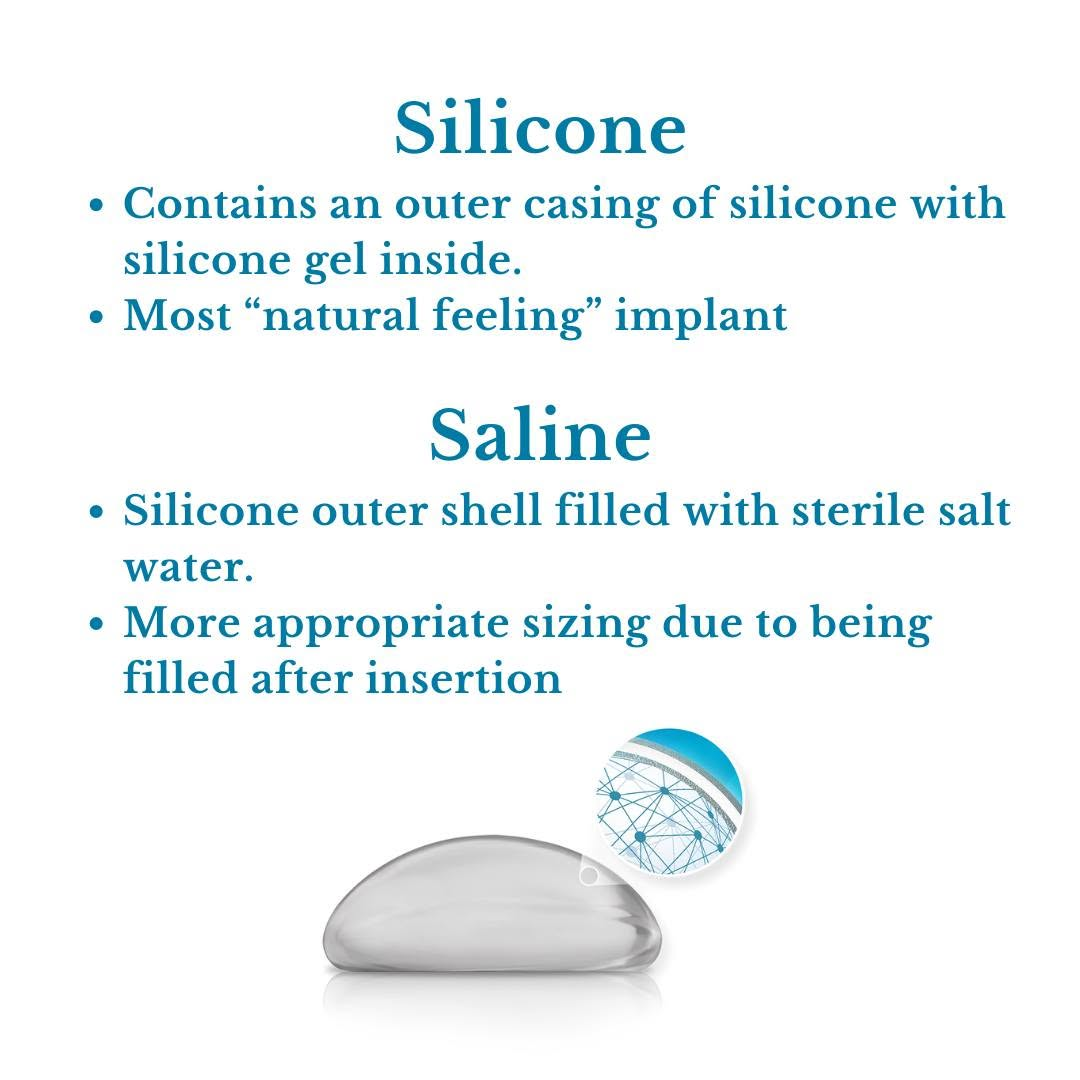
"The next appointment we discussed sizing options and what would work best for me, based on what I was trying to achieve. We decided to do Silicone for a more natural look and feel."
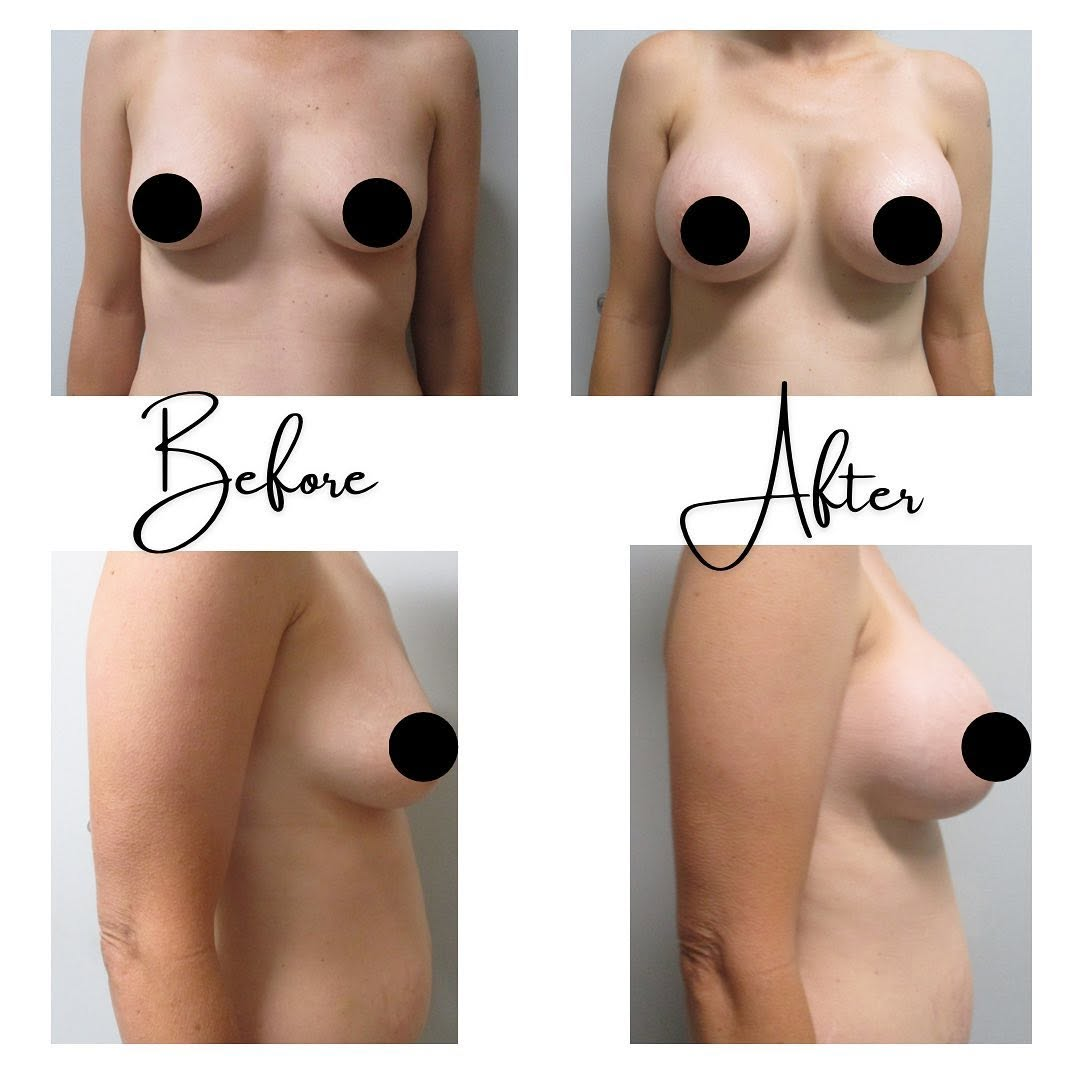
The short answer is that a good surgeon measures your body before she talks volume, and base width leads the list. Base width is the footprint of your natural breast across your chest, and the implant needs to fit inside it. An implant that is too wide can spill toward your armpit or show its edges. One that is too narrow can leave a gap, so this single measurement rules a lot of choices in and out.
From there, a few more measurements fill in the picture. Surgeons look at your chest wall width, the distance from your collarbone to your nipple, and the space between your nipple and the fold under your breast. They also check tissue thickness with a gentle pinch, because thin tissue covers an implant less easily.
A 2025 review notes that a pinch of about 2 cm or more often lets an implant sit above the muscle. Thinner tissue usually calls for partial muscle coverage instead.
Skin quality and your proportions round it out. Skin that has stretched with pregnancy or weight changes may not conceal a very large implant as smoothly, and most women have some natural asymmetry, so the two sides can call for slightly different plans. None of this is about finding a flaw. It is about building a result that looks like it belongs to you.
This measurement first approach is exactly how our practice works. Acadia Women's Health was built by Dr. Michelle Owens and Dr. John Gonzalez, and our surgeons plan around your frame, not a template.
He is board certified in obstetrics and gynecology by the American Board of Obstetrics and Gynecology, and a Fellow of the American Academy of Cosmetic Surgery. He has over 25 years of experience and was among the first in the Acadiana area to perform breast augmentation in the office.
If you want to see how we think about it, we walk through the same ideas in our guide to choosing the best implant size.
This is the part that keeps women up at night, and the good news is there is no single right answer, only the one that fits you. As a rough map, subtle results usually come from volumes under about 300 cc, while a fuller, more noticeable change tends to fall in the 300 to 450 cc range.
You are in good company wherever you land. In a 2024 study of 1,000 women published in PMC, the average implant chosen was about 340 cc, and 44 percent of patients went with a moderate profile to keep things balanced and proportional. In other words, most women choose a middle path that reads as natural, not extreme.
Your frame is the quiet deciding factor. Height, shoulder width, and the balance between your waist and hips all shape what looks proportional. A size that looks dramatic on a petite frame can look understated on a taller one.
Your daily life matters too. If you run, lift, or chase after little ones all day, a size that stays comfortable through all of that will serve you better than the biggest option on the table. For some women with significant looseness, a breast lift alongside implants gives a more lifted, proportional result than volume alone.
You do not have to picture all of this in your head. A free consultation is a one-on-one visit with one of our providers, where you can try external sizers and talk honestly about your goals.
It also helps to see real results. You can browse before and after photos of our own patients to find a look that feels like you.
We take the time to get it right. Flexible financing through Cherry, Affirm, and CareCredit also keeps the plan within reach.
Adriana came in unsure of her size, and left with a plan built around her own tissue.
"I was still on the fence about removing them completely or just replacing, so they analyzed my breast tissue and advised me that going with smaller, silicone gel implants with a lift would give me the exact look and satisfaction I was seeking."
Remember that picture in your head from the very beginning. The way you get there is not by locking onto a cup letter. It is by matching your breast augmentation to your own frame, tissue, and goals. That is what makes a result look like it belongs to you.
A good next step is low pressure and genuinely helpful. Browsing before and after photos of women with a similar build can make the numbers feel real. When you are ready, you can reach out to our team to try sizers and ask every question on your list.
At Acadia Women's Health in Crowley, we understand the body you have and the body you want, and we would be glad to help you feel confident and comfortable in your own skin again. To start a conversation, call us to schedule at 337-785-2006.
A common guide is about 130 to 150 cc for each cup size, though it varies with your band size and your frame. Wider frames often need a little more volume to move the same number of cups. Your surgeon will fine-tune the number to your measurements.
Going from an A to a C is often in the range of about 300 to 350 cc, but that is a starting estimate, not a rule. Your existing tissue and chest width can shift it up or down. The best way to see it on your body is with sizers at a consultation.
An A to D change typically lands somewhere around 370 to 450 cc for many women. Larger jumps also depend heavily on your base width, since the implant still has to fit your natural footprint. A larger frame may need a bit more, a smaller frame a bit less.
Around 300 cc is generally seen as a moderate, natural looking volume for the average frame. It often reads as about a one to two cup increase depending on where you start. On a very petite or very tall frame, though, that same 300 cc can look quite different.
At the same cc, a high profile implant projects forward more, so it can look fuller and rounder from the side. A low profile implant spreads the same volume wider for a flatter, softer slope. They are the same volume, just shaped and distributed differently.
For many women, a moderate or moderate plus profile gives the most natural balance, which is why it is such a common choice. The truly natural answer, though, depends on your chest width. Matching the profile to your frame is what keeps the result looking like your own body.
Your surgeon measures your base width, the footprint of your breast across your chest, to see how wide an implant can safely sit. If a large implant would spill past that footprint, it can look unnatural or show its edges. A higher profile can sometimes add volume on a narrow chest without going too wide.
Not usually. The most satisfying results tend to come from a size that fits your frame and your life, not the largest option available. Very large implants can strain your back and shoulders and stretch the skin over time, so comfort and proportion matter as much as volume.
Yes, and this surprises a lot of women. The same cc looks different depending on your chest width, skin, how much natural tissue you have, and the implant profile. That is exactly why sizing is personal and why a chart can only take you so far.
Imaging tools and external sizers can give you a helpful preview of how different volumes may look on your frame. They make the numbers feel real and are a great way to compare options during your visit. Keep in mind that a simulation is a guide, and your final shape settles as you heal.
Disclaimer: This article is for general educational purposes only and is not medical advice. Reading it does not create a physician-patient relationship. Every patient is different, individual results vary, and no outcome is guaranteed. Talk with a qualified physician about your specific situation before making any treatment decision.

Written by
Cosmetic Surgeon, Board-Certified Urogynecologist
Fellow of the American Academy of Cosmetic Surgeons; Fellow of the American College of Obstetricians and Gynecologists. Medical Degree: University of Miami School of Medicine; Residency: Orlando Regional Healthcare System as Chief Resident.
Our board-certified team offers personalized, judgment-free consultations to help you decide what's right for you.
RECENT POST
BROWSE BY CATEGORY
VISIT US
527 Odd Fellows Road STE B
Crowley, LA 70526
(337) 514-4369
Mon – Thu 8:00 – 5:00
Friday 8:00 – 12:00
%20(SM).png)
(sm).png)
(SM).png)