Acadia Women's Health
October 2, 2026
min read

If you are planning a labiaplasty, recovery is often the biggest unknown: how much swelling to expect, when sitting becomes comfortable again, and how to manage everyday tasks like using the bathroom while you heal.
The recovery follows a pattern you can plan for. In a 2021 systematic review covering 3,804 labiaplasty patients, 99 percent were satisfied with their results after healing.
At Acadia Women's Health in Crowley, Louisiana, our team walks women across Acadiana through this exact recovery, from the pre-op packet to the final follow-up visit. This guide covers the day-by-day timeline, hygiene and comfort tips, activity milestones, and the warning signs worth a phone call.
The easiest recovery is the one you set up before surgery day. A little planning during the week before your procedure means you come home to a house that's ready for you, not a to-do list.
Start with a small recovery station. Most women find these supplies cover nearly everything:
Plan for help, too. In a 2024 day-surgery study, 48.8 percent of plastic surgery patients needed hands-on help from a caregiver in the first 24 hours. Ask someone to drive you home and stay that first night, and block off at least a few days away from work.
Your consultation is the right place to get recovery questions answered for your body, not a generic one. At Acadia Women's Health, that visit is free and one-on-one with one of our providers. Ask how much time off your job needs, what your follow-up schedule looks like, whether you should consider having your surgery combined with another procedure, and which symptoms are normal versus worth a call.
Your aftercare instructions come home with you on paper in your pre-op packet, so keep them somewhere easy to find.
A little logistics work now saves stress later. You can manage appointments and complete intake forms through the patient portal before surgery day.
Cost planning belongs in this stage too. We offer flexible financing options through Cherry, Affirm, and CareCredit, so payment can fit your budget instead of straining it.

If you're wondering how long labiaplasty takes to heal, the honest answer comes in stages. The first three days ask the most of you, the first two weeks ask for patience, and by week six most of normal life is back. Full healing, including your final shape, takes 4 to 6 months.
Here's the arc at a glance:
Stage
What to expect
Days 1-3
Swelling and tenderness peak. Rest with your hips propped on a pillow, ice in short sessions, and stay on schedule with pain medication.
Days 4-7
Swelling starts to settle and pain fades to a dull ache. Many women with desk jobs feel ready for light work.
Week 2
Soreness eases noticeably. Gentle walks feel good. Dissolvable stitches begin to loosen, which can itch.
Weeks 3-4
Stitches finish dissolving. Sitting and longer walks feel comfortable again.
Weeks 5-6
Most swelling is gone. Your follow-up visit clears you for exercise, tampons, and intimacy.
Months 2-6
Deep tissue softens and the final shape settles in.
The first 72 hours deserve the most preparation. Swelling can look dramatic at first, and that's expected in an area with this much blood flow. Plan to do as little as possible: rest, ice, drink water, and let the early tenderness fade.
The itching that shows up around week two catches many women off guard. It usually means the stitches are dissolving and the nerves are settling, and both are signs of healing. Loose clothing and a little patience carry you through it.
One more thing worth knowing: the area often looks puffy or uneven for several weeks. That in-between stage is expected, and it does not predict your final result. This tissue heals well, and most women see little to no visible labiaplasty scar once everything matures.
By month four to six, the last of the deep swelling drains away. The shape that was planned before surgery becomes the shape you see.
Bathroom trips worry women more than almost anything else about this recovery, and the routine is simpler than you'd expect. It comes down to warm water, gentle habits, and a little planning.
Keep the area clean with a peri bottle instead of wiping. Fill it with lukewarm water, rinse from front to back after every bathroom visit, then pat dry with clean gauze or let the area air dry. Skip harsh soaps, scented washes, and anything with fragrance while the incisions close.
If urination stings during the first several days, the peri bottle helps there too. Squeeze a steady stream of warm water over the area while you pee, which dilutes the urine right where it touches healing skin. The stinging typically fades within the first week.
Constipation is common after any surgery, between the pain medication and all the extra rest. Straining puts pressure exactly where you don't want it, so start a stool softener early, drink water steadily, and keep fiber in your meals.
Showers are usually fine within a day or two, kept short and warm. Soaking is different. Hold off on baths, hot tubs, pools, and swimming until your surgical team confirms the incisions have fully closed, usually around 4 to 6 weeks.
Natalie found that steady guidance and follow-up care made her healing feel manageable from the start.
"The recovery process was smooth, and Dr. G's follow-up care was exceptional. I highly recommend him to anyone considering body contouring procedures."
Labiaplasty swelling responds well to a few simple tools used consistently. Ice, elevation, and friction-free clothing do more for comfort in week one than anything you can buy.
Use ice packs in 15-to-20-minute sessions with an hour or two between them, always wrapped in a soft cloth. Longer sessions can irritate the skin instead of calming it. Icing matters most in the first several days, when swelling after labiaplasty is at its peak.
Positioning helps more than most women expect. Lie back with a pillow under your hips so the area rests above the level of your heart. When you do sit, choose a soft cushion and shift your weight now and then instead of holding one position for hours.
Dress for airflow instead of style for a couple of weeks. Loose cotton underwear, flowy dresses, and soft pajama pants keep fabric from rubbing the incisions. Save the jeans, leggings, and shapewear for after your clearance visit.
For soreness, most women do well on acetaminophen taken on a steady schedule once any prescription runs out. Staying ahead of the discomfort keeps the whole day calmer than chasing it.
Dr. Michelle Owens is board certified in obstetrics and gynecology by the American Board of Obstetrics and Gynecology, and a Fellow of the American Academy of Cosmetic Surgery. She has performed feminine rejuvenation procedures for many years, so questions about this exact kind of comfort are everyday conversation at our office.
Once the early soreness settles, the questions shift from comfort to timing. Here's when normal life comes back.
Sooner than you might fear, and on a schedule your body sets one milestone at a time. Most women with desk jobs are back at work within 3 to 7 days, though some prefer a full week or two at home.
Movement returns in stages. Gentle walking is encouraged within the first day or two, because it keeps blood moving and helps swelling drain. Strenuous exercise and heavy lifting wait until about week four. Anything that presses or rubs directly on the area, like cycling, running, or horseback riding, waits the full six weeks.
You might be wondering, "Why six weeks for intimacy when I feel fine at three?" That's a fair question. Healing tissue needs about six weeks to rebuild enough strength to handle stretching and friction, even when the surface looks healed. The same rule covers tampons, so keep pads on hand if a period falls during recovery.
At Acadia Women's Health, the six-week visit is more than a formality. Your provider checks how the tissue has healed and gives you a clear, personal green light, so you're never left guessing about what's safe.
If you've been comparing yourself to labiaplasty recovery photos online, remember that most of them show the swollen early weeks. Healed before-and-after results tell a much more encouraging story.
Serious problems after labiaplasty are rare, and knowing that upfront matters. In a 2022 study of 1,648 labiaplasty patients, only about 1 in 100 needed a hospital readmission within the first month. Watching for a few specific signs is smart follow-through, not a reason to worry.
Call your surgical team promptly if you notice:
Most of these calls end in reassurance. Normal healing includes light spotting, puffiness, bruising, and itching, and it helps to hear a nurse confirm that what you're feeling is on track.
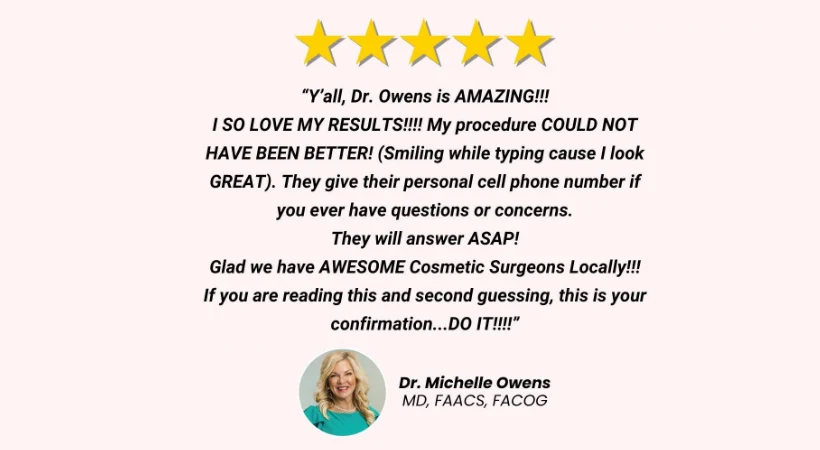
This is where it helps to have a team you can reach at any hour. At Acadia Women's Health, cosmetic surgery patients get their surgeon's personal cell number, so a 9 p.m. worry gets a real answer instead of a sleepless night. If anything on that list shows up, or you simply want another set of eyes, call our office right away.
Essence found that being able to message her care team directly made her whole recovery feel safe.
"My surgeon and his staff have made the entire process easy and comfortable! Answering all my questions and concerns. Gave a thorough explanation of everything to expect and issues that may occur. Got a tour of the office. He also gives his personal cell number to message when I would randomly think of anything day or night and answer back quickly. Surgery and healing went very well and I am 150% happy with my results."
You started with one honest question: what does recovery feel like, day by day? Now you know the shape of it. Labiaplasty recovery comes down to about three days of real rest, two weeks of taking it easy, and six weeks before everything is cleared. Most women who go through it tell us afterward that they're glad they did.
If you're still deciding, there's no rush and nothing to prove. When you're ready to talk it through, you can reach out to our team or call us at 337-785-2006 to schedule your free consultation.
At Acadia Women's Health, we've cared for South Louisiana women since 1999, and helping you feel comfortable in your own body is the heart of what we do. Whenever you're ready, we're here.
Use a peri bottle to pour warm water over the area while you urinate, which keeps urine from stinging the healing skin. Pat dry gently instead of wiping. The discomfort usually fades within the first week.
Most visible swelling fades by week six. The deeper swelling inside the tissue takes longer, often 4 to 6 months, which is why your final shape keeps improving after you already feel healed.
Stitches shedding between weeks two and four is a normal part of how they dissolve. If a stitch comes out in the first week, or you notice a gap opening or fresh bleeding, call your surgical team so they can take a look.
Yes. Swelling rarely settles evenly on both sides, so one side often looks larger or puffier for a few weeks. Wait until the 4-to-6-month mark before judging the final result.
Most of our patients at Acadia Women's Health with desk jobs feel ready within 3 to 7 days. Short walking breaks and a soft cushion make those first weeks back much more comfortable.
Gentle walking starts within a day or two. Strenuous workouts and heavy lifting usually resume around week four, while cycling, running, and other high-friction activities wait for your six-week clearance.
Plan on at least six weeks, and wait for your provider's go-ahead at the follow-up visit. Healing tissue needs that time to rebuild the strength to handle friction without pulling at the incision.
No. Inserting and removing a tampon stretches tissue that's still healing, so use pads for any period during the first six weeks. Your provider will confirm when tampons are safe again.
Quick, warm showers are usually fine within a day or two. Baths, hot tubs, pools, and open water wait until your incisions have fully closed, typically 4 to 6 weeks, because soaking softens healing tissue and invites bacteria.
Usually little to none. This tissue heals unusually well, and incision lines tend to fade into the natural folds. We talk through scar care before surgery and check in as you heal, so you'll know what to expect for your own skin.
Disclaimer: This article is for general educational purposes only and is not medical advice. Reading it does not create a physician-patient relationship. Every patient is different, individual results vary, and no outcome is guaranteed. Talk with a qualified physician about your specific situation before making any treatment decision.

Written by
Cosmetogynecology, Board-Certified Gynecologist
Fellow of the American Academy of Cosmetic Surgery; Fellow of the American Academy of Facial Esthetics; Fellow of the International Society of Cosmetogynecology (ISCG). Medical Degree: University of Mississippi School of Medicine; Residency: Orlando Regional Healthcare System as Chief Resident.
Our board-certified team offers personalized, judgment-free consultations to help you decide what's right for you.
RECENT POST
BROWSE BY CATEGORY
VISIT US
527 Odd Fellows Road STE B
Crowley, LA 70526
(337) 514-4369
Mon – Thu 8:00 – 5:00
Friday 8:00 – 12:00
%20(SM).png)
(sm).png)
(SM).png)